

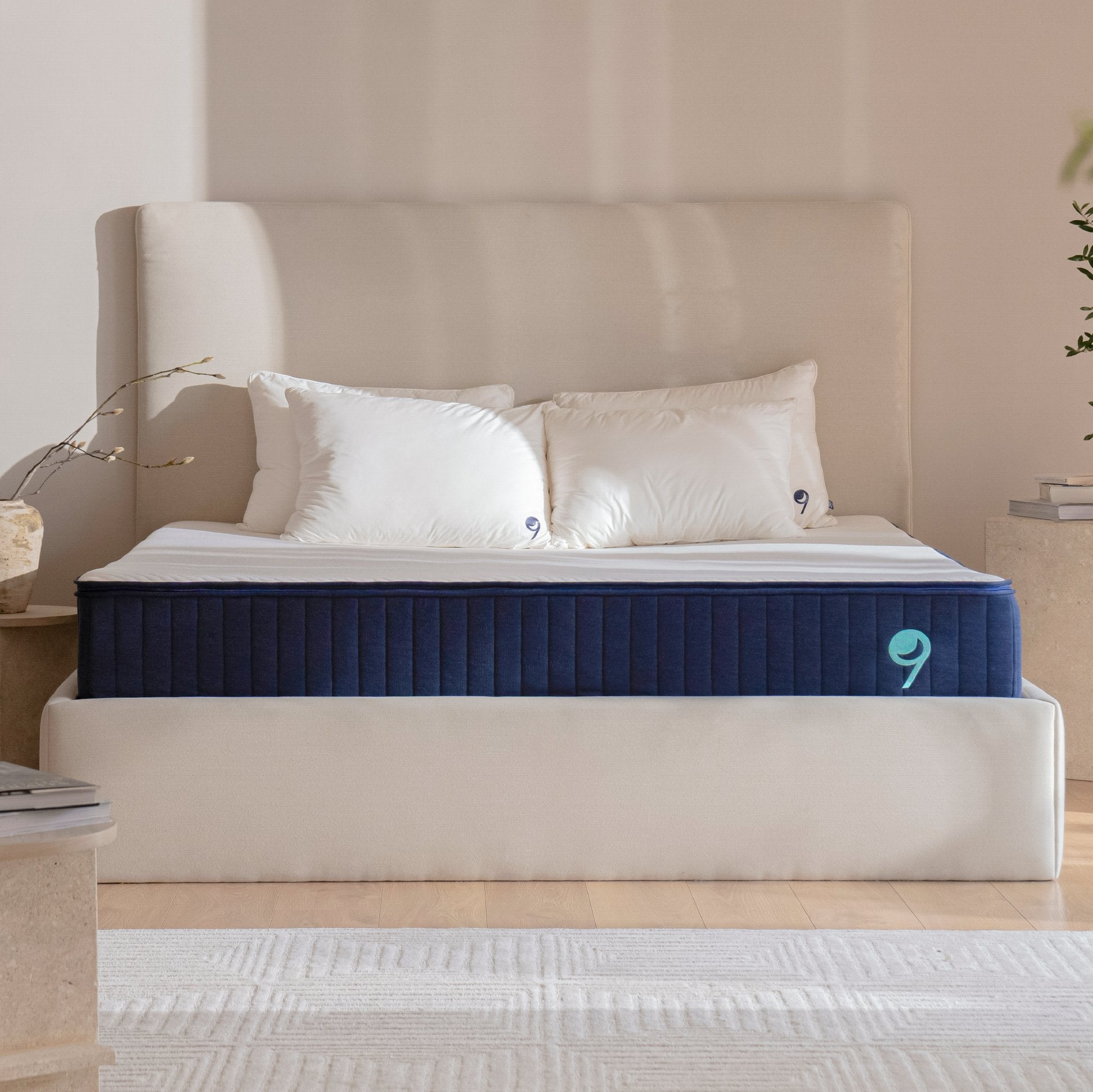












Sleep is one of our daily necessities, but have you ever paid attention to whether your sleeping pillow posture is correct? Or are you curious about how to use a pillow correctly? What are the right pillow positions for healthy sleep? Let's find out with Ru9!
Before going into detail about how to use a pillow correctly, we must first note some pillow requirements such as:
Pillow height and firmness
One of the first things you need to pay attention to is using the pillow correctly to avoid affecting your sleep and health. Conversely, if the pillow is too low or too soft, your head will sink deep into the pillow. In addition to the negative effects of using a low pillow, it can also cause puffy eyes after waking up, along with a mild headache due to uneven blood circulation.
And when choosing a sleeping pillow, you should not choose a pillow that is too hard or too soft. You should choose a pillow with the correct dimensions: 8-15cm high, 30cm wide, and 60cm long.
If you are wondering about choosing a pillow for yourself, why not try the moderately soft pillows designed to provide ideal support for your head, neck, and shoulders from Ru9 – a brand with many products, including sleeping pillows, that offer the best quality for you.

Choosing the right pillow is also an important factor for a good night's sleep.
Proper height helps you sleep well and is good for your cervical spine
Placing the pillow in the right position is also an important way to avoid nightmares. Do not let your shoulder blades rest on the pillow, as this will cause your head to tilt backward, which can lead to nightmares with difficulty breathing. If the pillow is placed too far from the nape of your neck, with only your head on the pillow, your neck may be bent, causing neck pain and stiffness upon waking.
No matter how expensive the pillow is, you still won't feel refreshed if you don't use it correctly. If you feel uncomfortable with a high pillow, you may be using it incorrectly, leading to neck pain and difficulty sleeping.
1. So, what is the correct way to use a pillow?
Currently, to have a good night's sleep and improve health, we must determine our most common sleeping position to choose a pillow that suits our daily sleeping posture.
Pillowing for back sleepers
Sleeping on your back offers great health benefits, but some people find it uncomfortable. Some back sleepers experience pain in this position. Additionally, people with acid reflux and sleep apnea may find it difficult to sleep on their backs unless they have a pillow mattress.
You should use a medium-firm pillow with moderate height to alleviate these problems.
With Ru9's Niu pillow product, you can easily fall into a deep, more comfortable sleep due to its suitable design, breathable material, and appropriate support for your neck and shoulders.
Correct pillow use for side sleepers
Sleeping on your side is the most common sleeping position. This is an instinctive way to go to bed early and feels comfortable. Side sleepers will prefer a higher (thicker) pillow.
When you sleep on your side, your pillow needs to be thick enough to keep your spine straight, but not so thick that it causes your neck to bend. Side sleepers will feel most comfortable on a pillow that is not too soft.
Correct pillow use for stomach sleepers
Sleeping on your stomach is also a habit for many people. Stomach sleepers often prefer soft, lightweight pillows with good elasticity.
Sleeping on your stomach causes your head and spine to bend upward unnaturally. Maintaining this position for many hours continuously is not good for your back or neck.
Therefore, Ru9 pillows are exactly what you need right now, with soft and breathable Graphene Memory Foam material, 12cm high, suitable for Asian body types, providing perfect support for your head, neck, and shoulders. Ru9 pillows will help you avoid neck pain when you wake up.

Is sleeping on your stomach with a pillow good for your health?
2. Should you use a pillow or not?
To maintain your sleeping position, you should use a pillow and elevate it while sleeping. It keeps your neck in a neutral position and keeps your body properly aligned in any posture. Specialized pillows are recommended for people with neck and back pain as they effectively reduce pressure.
Therefore, you should sleep with a pillow to maintain good posture. It prevents sleep apnea, snoring, acid reflux, neck pain, and back pain.
 So, should you sleep with a pillow or not?
3. Frequently Asked Questions
How should I use a pillow to avoid neck pain?
Neck pain during sleep is often caused by poor alignment. While sleeping on your back and neck is recommended to prevent neck pain, you must also ensure your body is properly aligned. You should adjust your pillow so that the lower part of your neck is higher than the lower part of your head. This will keep your neck aligned with your head, avoiding neck and shoulder strain.
Where should I place my arms when sleeping on my side?
Placing your arms in the wrong position when sleeping on your side can cause shoulder pain and numbness in your arms. You should keep your arms beside your body when you sleep.
You should absolutely avoid placing your hands under the pillow or raising them above your head. This greatly affects the shoulders and is not a comfortable position. It can completely disrupt a good night's sleep.
Is it bad to sleep with your hand under the pillow?
Sleeping with your hand under the pillow can be comfortable but is not recommended. This is common among stomach and side sleepers and affects the arms and shoulders.
People often do this when the pillow is not firm enough or not high enough. You should get a comfortable pillow instead of propping your head with your hand, as it can lead to pain or numbness in your arms if done continuously for a long time.
 Please note to place your pillow correctly to support your sleep.
Besides, using a pillow in the correct sleeping position will help support your cervical spine. Try following the advice below:
- Place the pillow under your neck
- Do not place the pillow on your shoulder blades
- Lie squarely in the middle of the pillow
- If you sleep on your back, place a pillow under your knees and another under your lower back. This will help your spine maintain its natural curve and reduce spinal degeneration.
- If you sleep on your side, place a pillow between your legs and one under your lower back. This position is especially suitable for people with spinal conditions and those experiencing pain and inflammation, as it will alleviate the pain.
These habits of proper pillow placement will help you improve your overall health and sleep quality. While this may seem like a small detail, it actually greatly affects everyone's life. Please pay attention and actively make changes from these small things.
Related articles:
- Effective home remedies for snoring with honey
- How to clear your mind when sleeping
- How to sleep well when there is noise around you


