

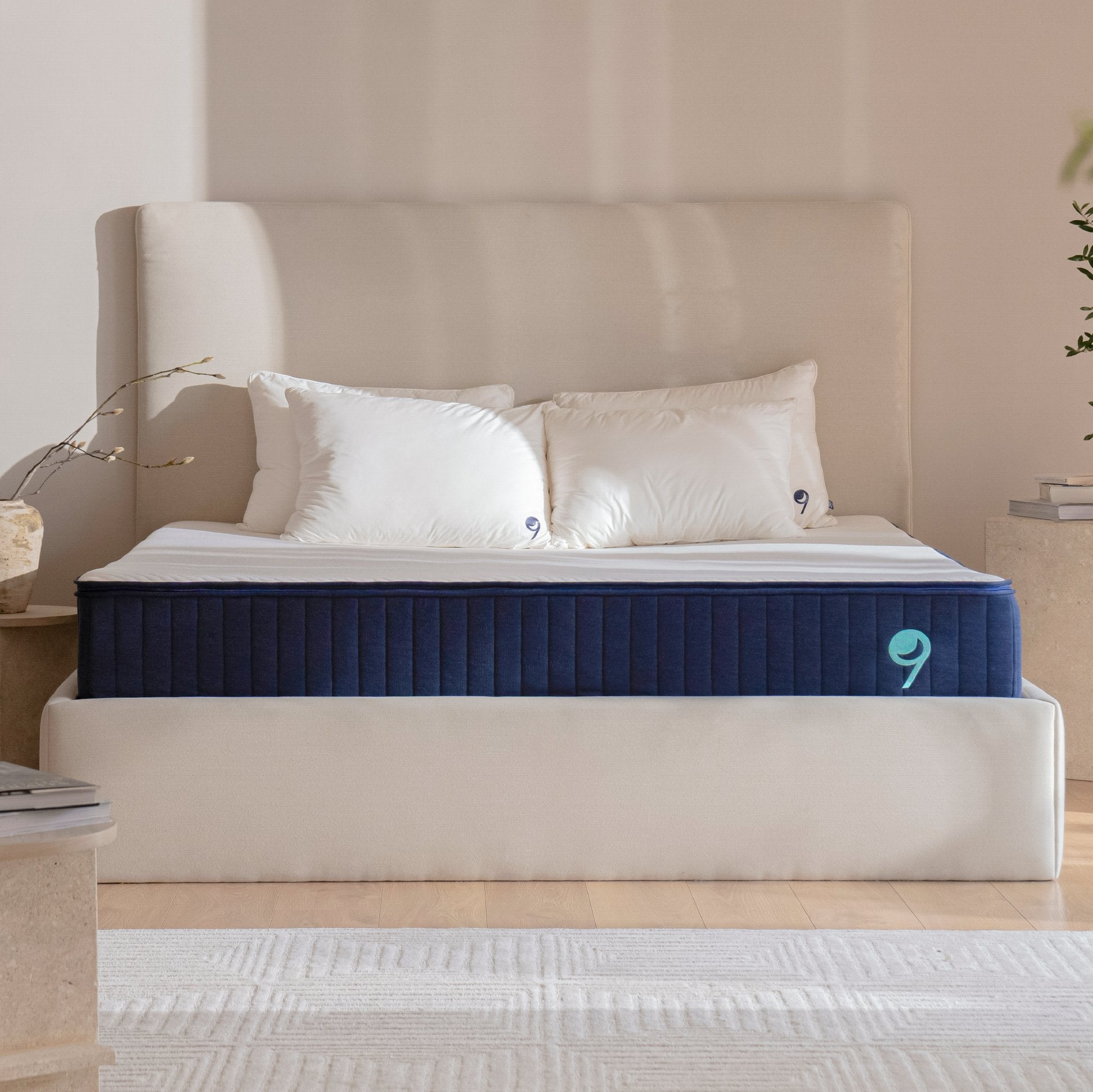


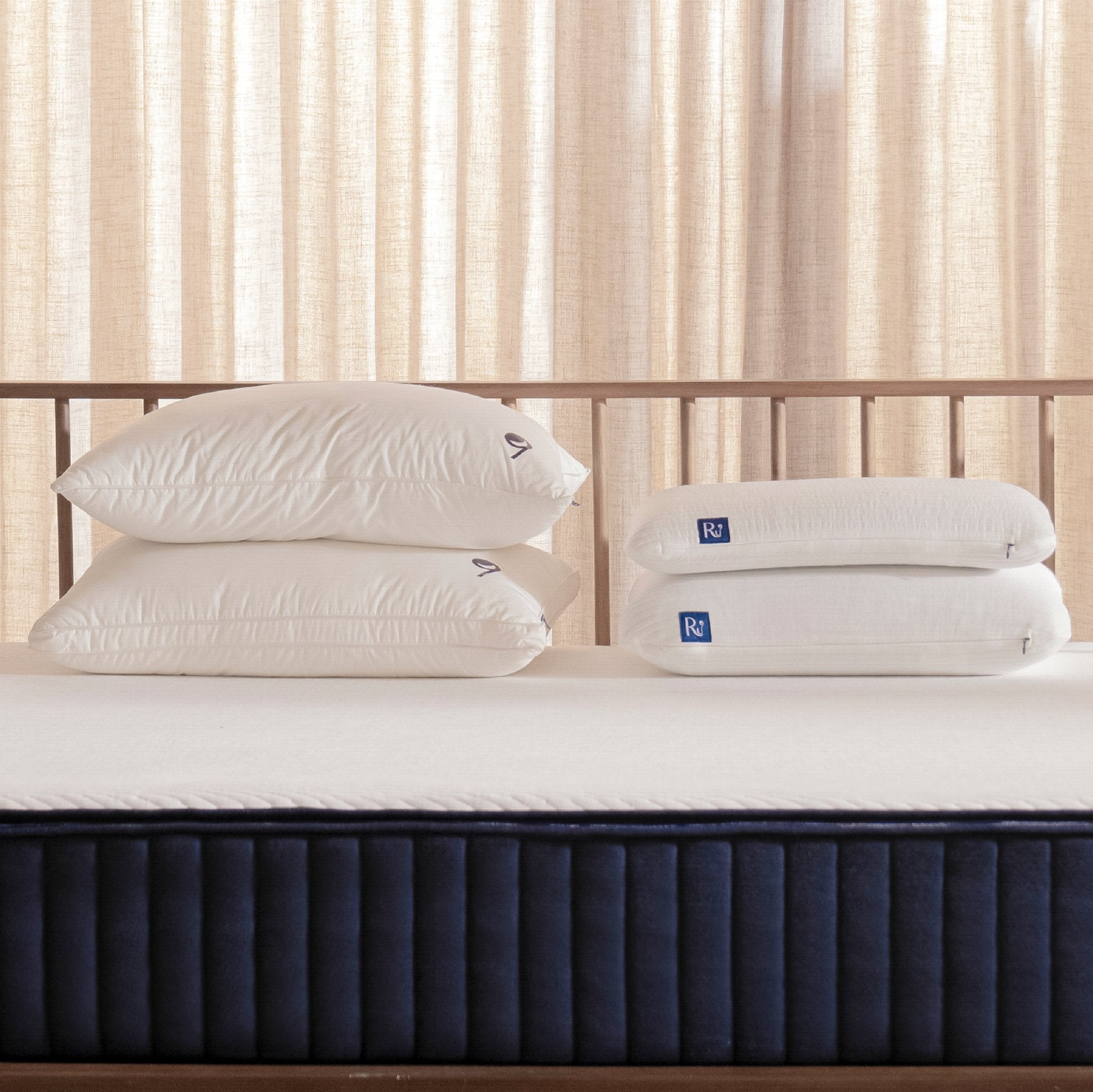






Foam vs. Latex Mattresses - A Detailed Review
Are you torn between a foam mattress and a latex mattress? What are their differences, and what are the pros and cons of each? This article will provide a detailed evaluation and comparison of foam and latex mattresses.
1. Definitions of Foam and Latex Mattresses
To help you better understand foam and latex mattresses, Ru9 will provide an overview of these two product types.
Foam Mattress
Foam mattresses are made from polyurethane foam (PU foam, memory foam, sponge, etc.), giving them a soft, lightweight, and supportive quality.
Foam mattresses come in various types, such as memory foam mattresses, PU foam mattresses, and synthetic latex mattresses.
See details: What is a foam mattress? Detailed pros and cons of foam mattresses.
Latex Mattress
Latex mattresses are divided into three types: natural latex mattresses, synthetic latex mattresses, and blended latex mattresses. In this article, we will only compare natural latex mattresses with foam mattresses due to their similar quality.
Natural latex mattresses are made from 100% natural rubber sap, without added chemicals, making them very gentle, elastic, breathable, durable, and environmentally friendly.
See more: Detailed comparison of synthetic latex and natural latex mattresses
2. Detailed Comparison of Latex and Foam Mattresses
Most customers interested in foam mattresses often hesitate between buying a latex mattress or a foam mattress. To help customers make an informed decision, Ru9 will provide a detailed comparison of latex and foam mattresses!
Elasticity - Support Capability
Latex mattresses are currently the most supportive type of mattress. With a stable surface that is neither too firm nor too soft, natural latex mattresses are very elastic and quickly return to their original state after pressure is applied.
Foam mattresses provide comprehensive body support with their ability to evenly distribute pressure, conform to the body, and remember the natural curves of the spine.
Safety
With 100% natural ingredients, natural latex mattresses inherently possess anti-fungal and insect-repellent properties. High-end products also integrate antibacterial technology to effectively prevent skin inflammation and respiratory issues, providing a safe user experience for customers.
Although made from chemicals, foam mattresses have a viscoelastic structure that effectively prevents dust mites, limiting irritation and respiratory illnesses.
Breathability
Natural latex mattresses have thousands of ventilation holes on their surface, making them always breathable, cool, and effective at preventing back stuffiness.
Foam mattresses have relatively poor breathability and can easily feel stuffy in the summer due to their heat-retaining properties.
Durability
Natural latex mattresses are among the most durable mattresses on the market, with a lifespan of up to 20 years if properly maintained.
Foam mattresses have a lifespan of about 10 years and retain their shape without sagging during use.
Weight
Natural latex mattresses have a solid, one-piece construction, making them very heavy and bulky, difficult to move and clean.
Foam mattresses are much lighter than latex mattresses. Ru9 foam mattresses also have a rollable design, making them extremely convenient for daily life.
Environmental Friendliness
Natural latex mattresses are naturally sourced and biodegradable, making them very environmentally friendly.
Foam mattresses are made from synthetic materials and are not self-biodegradable, making them less environmentally friendly.
Summary table comparing foam and latex mattresses
Comparison Criteria
Natural Latex Mattress
Foam Mattress
Elasticity and Support
Best elasticity and support on the market
Good, but less than natural latex mattresses
Softness
Quite firm surface
Very soft, conforms to the body
Antibacterial - Safety
Almost absolute natural antibacterial properties
Antibacterial through integrated technology
Breathability
Superior
Prone to back heat in summer
Durability
20 years
7 - 10 years
Weight
Very heavy, bulky
Very light, can be rolled
Price
High-end segment, tens of millions VND
Mid-to-high range, more accessible than natural latex mattresses
In summary, natural latex mattresses and foam mattresses are both good types of mattresses, complementing each other in many criteria. If you prefer a soft, lightweight, easy-to-clean mattress with a more accessible price, then a foam mattress is suitable for you. If you prefer a mattress with superior elasticity, coolness, safety, durability, and are willing to accept a higher price, then a natural latex mattress is the perfect choice.
You might not know:
What is a pressed cotton mattress? Pros and cons of pressed cotton mattresses
What is a spring mattress? Structure and types of spring mattresses
Comparison of foam and spring mattresses
Comparison of Foam and Synthetic Latex Mattresses
Comparison of Foam and Pressed Cotton Mattresses
3. Top Foam and Latex Mattresses Worth Buying Today
Original Foam Mattress
The Original is Ru9's best-selling memory foam mattress due to its softness, elasticity, and optimal body support.
The mattress has a 3-layer structure:
Memory Foam layer reduces pressure on the body and alleviates aches and pains.
Ru9 Contour Foam fully supports each muscle group.
Firm PU base foam layer prevents motion transfer.
Pros and cons of the Original Foam Mattress
Pros
Soft, highly elastic, conforms to body curves.
Supports muscle groups, distributes pressure, and reduces aches and pains during sleep.
Breathable, hygienic, and antibacterial.
Compact size, easy to clean and move.
Available in 20cm or 25cm thickness.
Nest Ru9 Mattress
The Nest Ru9 mattress is an affordable foam mattress with an average thickness of about 15cm.
The Nest Ru9 mattress consists of 2 layers:
Ru9 Contour Foam: Elastic, conforms to the body, distributes pressure to muscle groups, and provides effective support.
Ru9 Support Foam: Firm, prevents motion.
Pros and cons of the Nest Ru9 Mattress
Pros
Soft, supportive material.
Highly elastic, reduces body aches during sleep.
Durable.
More affordable than the Original Ru9 mattress.
L'ADOME COOL Lien A Latex Mattress
L'ADOME COOL is a premium natural latex mattress from Lien A, featuring antibacterial properties, elasticity, breathability, and durability. The product also integrates COOLADAPT technology into the mattress cover, providing a cool sleeping sensation year-round.
Unique Plus Van Thanh Natural Latex Mattress
The Unique Plus latex mattress is a premium natural latex mattress from the well-known brand Van Thanh. The mattress offers perfect elasticity, reduces pressure on muscle groups, and provides multi-zone body support, ensuring comfortable sleep in any position.
Unique Plus features integrated antibacterial and anti-fungal technology, along with millions of ventilation holes, keeping the mattress clean and cool in summer and warm in winter. This latex mattress boasts superior anti-motion transfer technology, ensuring a peaceful night's sleep.
The mattress comes with a 15-year warranty and is available in 10cm, 15cm, and 20cm thicknesses.
Conclusion
Above is an evaluation and comparison of foam and latex mattresses, as well as their pros and cons. We hope you have found a suitable product and a reputable mattress retailer!
Read more: Which type of mattress should you buy for good health?
09/10/2025

What is natural rubber? Structure, properties, and applications
Natural rubber is one of the most widely used materials in daily life due to its outstanding properties and high applicability. It is also a popular material for its durability, elasticity, and environmental friendliness. So, what is natural rubber? What are its advantages and disadvantages? How is it applied in practice? Let's find out in detail through the article below!
1. What is natural rubber?
1.1. Concept
Natural rubber is an elastic material produced entirely from the latex of rubber trees (Hevea brasiliensis), with the molecular formula (C5H8)n - which is a polymer mixture of isoprene.
Initially, natural rubber was in a liquid state. After the vulcanization process in 1839, it became more durable and elastic and was widely used in industry.
Besides the rubber tree, some other plant species can also produce latex, but they do not play a significant role in commercial production. During World War II, Germany attempted to exploit alternative sources, but this stopped when synthetic rubber was invented.
1.2. History of development
16th century: Natural rubber was discovered and used by the people of South America.
Centuries later: South America remained the main supplier but with limited production.
1876: Henry Wickham smuggled 70,000 rubber tree seeds from Brazil to England, then distributed seedlings to countries such as India, Sri Lanka, Indonesia, Singapore, and Malaya (now Malaysia).
1873: India experimented with rubber cultivation at the Calcutta Botanical Garden.
1902: India began commercial rubber cultivation in Thattekadu, Kerala.
1888–1911: Sir Henry Nicholas Ridley promoted rubber production in Singapore and Malaysia by developing efficient tapping techniques.
20th century: Natural rubber expanded to Africa, with major production centers in the Congo Free State, Liberia, and Nigeria.
Currently, natural rubber remains important in the global economy but is gradually being replaced by synthetic rubber.
1.3. Structure and chemical formula of natural rubber
Chemically, natural rubber is polyisoprene – a polymer of isoprene.
The structure of natural rubber consists of cis-1,4 isoprene monomer units linked together, forming a macromolecular chain. In addition, about 2% of the monomer units in natural rubber are linked in a 3,4 configuration.
Similarly, the plant resin Gutta-percha is also a polymer of isoprene but has a trans-1,4 structure, unlike natural rubber.
1.4. Physical properties
At low temperatures, natural rubber crystallizes, fastest at -25 °C and melts at 40 °C.
Density 913 kg/m³, glass transition temperature -70 °C.
Volume expansion coefficient 656 × 10⁻⁴ dm³/°C, thermal conductivity 0.14 W/m·K, specific heat capacity 1.88 kJ/kg·K.
Dielectric permittivity 2.4–2.7 (@1000 Hz/s), loss tangent 1.6 × 10⁻³.
Dissolves well in straight-chain, cyclic organic solvents, CCl₄, but insoluble in alcohol and ketones.
2. Natural rubber production process
2.1. Latex collection
The most common method is tapping: harvesters cut a spiral groove around the trunks of mature trees, which severs the latex vessels, allowing the white milky substance to flow out.
The cut is usually at an angle of about 30 degrees. To collect the exuding latex, a cup, bowl made of glazed clay, or a plastic bucket is often used.
2.2. Raw material quality control
After harvesting, the latex is inspected for quality using a photosensitive latex method. Next, the latex is transferred to specialized storage facilities with airy, clean, and hygienic cement floors. Here, workers sort and mix different types of latex according to technical standards and begin mechanical processing steps.
2.3. Mechanical processing
Natural rubber latex is separated into smaller blocks of 5-15kg via conveyor belts, making it easier to remove impurities and fit into the kneading machine. These blocks of latex are then put into a mixing tank for washing and then flattened. Finally, the latex is transferred to a combined shredding machine to break it down into a loose crumb form.
2.4. Thermomechanical processing
Tough latex needs to be converted into soft rubber through four processing steps including thermal oxidation, heat, chemical, and mechanical treatment by mixing with several other compounds. After being stacked into drying containers in specific quantities, the latex is hot-dried at approximately 150-200 degrees Celsius for 24 hours.
2.5. Weighing and pressing
Once the hot drying process is complete, the rubber is transferred to a sorting table to cool naturally before being weighed. The semi-liquid latex needs to be heated and measured using specialized equipment. Then, all the latex is fed into the press chamber, where it undergoes shaping and packaging in PE bags.
2.6. Packaging and preservation
PE bags containing natural rubber are lined with two layers of nylon mats, an inner translucent layer and an outer opaque layer.
3. Analysis of the advantages and disadvantages of natural rubber
3.1. What are the advantages of natural rubber?
High elasticity: Thanks to its flexible molecular structure, natural rubber can stretch and quickly return to its original state when pulled.
Safe for health: Completely natural, contains no harmful chemicals, friendly to skin and user health.
Environmentally friendly: Easily biodegradable, contributing to ecosystem protection.
Antibacterial: Prevents the growth of bacteria and pathogens, ensuring hygiene.
High durability: Products made from natural rubber have a long lifespan and are durable over time.
3.2. What are the disadvantages of natural rubber?
High cost: The complex production process, limited output, and dependence on natural conditions make the price of natural rubber higher than other materials.
Easily oxidized: Containing no preservatives, natural rubber is easily oxidized when exposed to the environment.
Waste treatment: The production process remains controversial due to the inability to thoroughly treat the generated waste.
3.3. Which is better, natural rubber or synthetic rubber?
Unlike natural rubber, which is 100% natural, synthetic rubber is produced by humans through the polymerization of monomers into polymers. Each type of monomer will create synthetic rubber with different characteristics.
So why, when natural rubber already exists, was synthetic rubber researched and created? Is synthetic rubber better than natural rubber? In reality, the two types of rubber have different advantages, and therefore they are also prioritized for different applications.
Overall, natural rubber possesses excellent elasticity, flexibility, antibacterial properties, and long-lasting durability. Therefore, it is best suited for making rubber mattresses – products that promote health and can be used for a long time.
On the other hand, synthetic rubber has better heat resistance, abrasion resistance, anti-aging properties, and weather resistance, so it is often applied in the marine industry, general industry, and the production of outdoor products, etc.
Therefore, to conclude whether natural rubber or synthetic rubber is better, it must be based on the needs and application area.
4. What are the applications of natural rubber?
4.1. Natural rubber mattresses
Advantages of natural rubber mattresses
Natural rubber stands out for its optimal durability and elasticity. Thanks to its flexible molecular structure, this material can stretch more than 9 times and still return to its original state, ensuring high durability without becoming stiff.
Additionally, natural rubber is safe for health due to its natural antibacterial properties, which helps reduce the risk of skin diseases and respiratory illnesses. Being entirely natural, it contains no harmful chemicals, providing peace of mind for users.
Not only beneficial for health, natural rubber is also environmentally friendly. Its high biodegradability and recyclability help reduce waste, contributing to ecosystem protection and minimizing negative impacts on the living environment.
If you are not satisfied with these advantages, consider other mattress materials, such as high-quality Foam mattresses or Topper mattresses. These product lines use the highest quality memory foam, providing an excellent sleep experience.
Dunlopillo natural rubber mattresses
Dunlopillo rubber mattresses are renowned for their high quality and sophisticated design. Using Dura Aire rubber with a dense structure and antibacterial properties, the mattress helps keep the spine naturally aligned. The two-sided ventilation system helps control humidity, keeping the mattress dry and fresh.
Dunlopillo also integrates many modern technologies such as nano-bionic and Protex, supporting blood circulation and body temperature balance. The two-sided partition design enhances usability, providing comfort in all sleeping positions. The product comes with a 10-year warranty, with prices ranging from 15,000,000 to 38,000,000 VND.
Lien A natural rubber mattresses
Lien A rubber mattresses are made from 100% natural rubber, safe for health and environmentally friendly. Thanks to advanced deodorizing technology and antibacterial properties, the mattress is always clean and fresh. With a firm surface, high elasticity, and good weight-bearing capacity, the mattress does not sag over time. The smart design optimally distributes pressure, supports blood circulation, and regenerates energy.
A system of millions of ventilation holes effectively dissipates heat, providing a comfortable feeling in all weather conditions. In particular, the mattress also has good water drainage capabilities, making it an ideal choice for families with small children. The product's price ranges from 10,000,000 to 35,000,000 VND.
Kim Cuong natural rubber mattresses
Kim Cuong rubber mattresses are known for their high elasticity, providing a soft feeling and excellent body support, helping to maintain a comfortable sleeping posture. The natural rubber material meets inspection standards, combined with advanced production technology, ensuring durability and a long lifespan.
The product is manufactured on a modern 4.0 production line, optimizing quality and limiting sagging over time. However, the mattress has a moderate firmness, not too soft, so it may not be suitable for those who prefer a soft mattress. Additionally, this product line is not truly diverse in specialized designs for different health needs.
With outstanding advantages, Kim Cuong rubber mattresses range in price from 6,090,000 to 20,990,000 VND, suitable for those looking for a high-quality and durable product.
See more: Which rubber mattress is good? Top 5 best rubber mattresses to buy today
4.2. Natural rubber pillows
Natural rubber pillow cores are made from 100% natural rubber, with a milky white color and excellent elasticity. Thanks to its uniform rubber density, the pillow effectively disperses pressure, keeping the neck aligned with the spine, reducing pain when lying in one position for a long time. The high elasticity allows the pillow to quickly return to its original shape within 3-5 seconds, providing a soft feeling and good support for sleep.
The cotton fabric cover has good moisture absorption, ensuring breathability and safety for the skin. Currently, there are many quality natural rubber pillow brands on the market such as Dunlopillo, Van Thanh, Diamond, Dong Phu, Lien A, etc., suitable for various usage needs.
4.3. Other applications
Natural rubber is widely used in many industries due to its elasticity, durability, and good load-bearing capacity.
In the construction industry, rubber is used for damping, floor lining, manufacturing heat-resistant rubber pipes, steel-reinforced rubber sheets, and sand-pumping rubber pipes. The food industry utilizes specialized rubber to produce food-grade hoses, fish pressing rollers, and oil pump screw pipes.
In industry, rubber is used for window gaskets, molded rubber, and damping mats. The irrigation and hydropower industries apply rubber in waterproofing equipment, waterstops, and coal gate seals. Additionally, natural rubber plays an important role in healthcare, with products such as gloves and rubber stoppers, helping to ensure hygiene and protect users' health.
5. Guide to identifying real natural rubber mattresses
Color: Real rubber mattresses usually have a cream, light pink, or natural white color, while fake mattresses have darker colors, tend to yellow easily, or appear in many strange shades.
Scent: Real rubber has no smell or a slight smell like chocolate. In contrast, fake mattresses often have a pungent odor or an artificial fruity fragrance.
Feel when used: Real rubber mattresses provide softness, do not transfer motion when turning over, and have good elasticity, quickly returning to their original state. Meanwhile, fake mattresses are often hard, causing pain at the contact surface, easily sinking deeply, and flattening quickly after a short period of use.
Certificates: Real mattresses come with full certificates of elasticity, flatness, load-bearing capacity, anti-counterfeit stamps, and clear warranty policies. In contrast, fake mattresses often lack documents or use fake certificates and labels.
We hope this information helps you better understand natural rubber and choose the most suitable mattress.
See more:
What is artificial rubber mattress? Comparing natural rubber and artificial rubber mattresses
What is young rubber? Analysis of the advantages, disadvantages, and applications of young rubber
Reference source: https://en.wikipedia.org/wiki/Natural_rubber
19/08/2025

What is a blended latex mattress, and is it any good?
Is Blended Latex Mattress good? Why is this type of mattress so popular? Is the price of a blended latex mattress high? If you also have questions about this product line, let's find out in this article by Ru9.
1. What is a blended latex mattress?
A blended latex mattress is a type of mattress whose main component is shredded foam, also known as compressed foam. Shredded foam is compressed into a complete mattress using specialized techniques and adhesives in the mattress industry.
A blended latex mattress is a type of mattress made from compressed foam
Additionally, blended latex mattresses are often supplemented with recycled polyurethane and other materials to improve the mattress's flexibility and firmness.
You might be interested in:
Should you buy a spring or latex mattress? Pros and cons of each type
Should you use a mattress topper with a latex mattress?
2. Evaluating the pros and cons of blended latex mattresses?
2.1. Advantages
High elasticity, good weight-bearing capacity: Blended latex mattresses are designed with a structure similar to natural latex mattresses, offering extremely high elasticity and less sagging during use.
Effective musculoskeletal support: The flat sleeping surface not only reduces joint and muscle pain but also supports stable blood circulation during sleep.
Long lifespan: With proper use and care, blended latex mattresses can last 7-10 years.
Absolutely quiet: Blended latex mattresses typically have a solid core structure, which allows them to isolate vibrations and noise when pressure is applied to the mattress.
Affordable price: The quality of synthetic latex mattresses is not significantly different from natural latex mattresses, but the price is much lower. This is an economical latex mattress option that fits many budgets.
Blended latex mattress products have quite a few outstanding advantages
2.2. Disadvantages
Poor breathability: The dense structure gives the mattress high heat retention, causing stuffiness and a hot back on scorching summer days.
Less environmentally friendly: Unlike natural latex mattresses, which are environmentally benign, the components of synthetic latex mattresses are very difficult to decompose. Therefore, they will partially harm the natural environment.
Can cause skin irritation: Because the ingredients are mixed with chemical substances, blended latex mattresses can cause irritation if you have sensitive skin. In addition to symptoms of skin allergies and rashes, the mattress can sometimes affect breathing.
Limited antibacterial capability: Latex mattresses are renowned for their nearly absolute antibacterial properties. However, blended latex mattresses will be quite limited in this regard, as the materials of the mattress can sometimes be a breeding ground for bacteria and mold.
This product meets many quality criteria
2.3. Is a blended latex mattress good, and should you buy one?
With the analyses above, Ru9 believes you now have a basis to answer this question.
If you're looking for an affordable latex mattress with outstanding elasticity, good for joints and bones, and a long lifespan, then why hesitate to choose a blended latex mattress? Conversely, if you prioritize sustainable latex mattress products with good antibacterial properties and breathability, then you might consider buying a natural latex mattress.
Below is a brief comparison table of blended latex mattresses, synthetic latex mattresses, and natural latex mattresses for your further information.
Criteria
Blended Latex Mattress
Synthetic Latex Mattress
Natural Latex Mattress
Material
Compressed foam (Shredded foam)
Polyurethane foam (PU Foam)
100% natural latex
Elasticity, weight-bearing capacity
Good
Good
Good
Good for joints and bones
Good, flat surface, stable, very good bone support
Good, soft, perfectly conforms to body curves
Good, both soft and stable
Breathability
Average
Average
Good
Antibacterial
Average
Average
Good
Environmentally friendly
No
No
Yes
Weight
Light, often foldable structure
Light, often foldable structure
Heavy, bulky
Lifespan
7 - 10 years
7 - 10 years
Up to 20 years
Price
Affordable, mid-range from 2 million VND
Affordable, mid-range from 2 million VND
High price, premium segment
See more:
What is an activated latex mattress, is it good?
Which latex mattress is best today?
What is a memory foam mattress? How is the quality of a memory foam mattress?
3. Top blended latex mattresses to buy
3.1. Kim Cuong Blended Latex Mattress
Kim Cuong blended latex mattresses are consistently highly rated by consumers as they fully meet criteria such as good support, high aesthetics, and reasonable prices. All products from Kim Cuong provide a comfortable feeling and quality sleep for users.
3.2. Lien A Blended Latex Mattress
As one of the largest and most reputable mattress brands on the market today, Lien A offers a diverse range of latex mattress products with varying qualities and price points to meet the diverse needs of consumers. Lien A blended latex mattresses are known for their high durability, good elasticity, and extreme softness.
3.3. Van Thanh Blended Latex Mattress
Blended latex mattresses, and latex mattresses in general, are Van Thanh's strength. Van Thanh blended latex mattresses have high elasticity, durability, flexibility, and effectively support the body. Additionally, these products are fully sterilized to ensure consumer safety.
Van Thanh is a trusted brand in the industry
3.4. Edena Royal Synthetic Latex Mattress
Edena Royal has been a resounding success in recent years with its high-quality mattress products. The Edena Royal blended latex mattress has a solid block structure but still ensures good breathability. In addition, the mattress also has high durability and excellent body support capabilities.
Edena Royal Blended Latex Mattress
3.6. Dong Phu Blended Latex Mattress
All blended latex mattresses from the Dong Phu brand are produced using machinery imported from Germany and Malaysian technology. Despite this, the mattresses still have a very reasonable price.
Not only do these products offer good support, but they are also highly praised for their softness and comfort. The only drawback of these products is that they can deform after prolonged use.
Dong Phu blended latex mattresses are relatively inexpensive
4. What to consider when buying a blended latex mattress?
To choose a quality blended latex mattress, please consider the following factors:
Choose a blended latex mattress made from materials that ensure safety. Prioritize blended mattresses made from natural latex.
Have knowledge about latex mattresses and understand your own needs. As mentioned, there are currently about 3 main types of latex mattresses with different pros and cons. Based on your needs and financial capabilities, choose the most suitable mattress.
Prioritize major brands: Latex mattresses are among the most counterfeited and fake products on the mattress market. Therefore, choose to buy blended latex mattresses from reputable brands that can provide complete certification documents for quality and product origin. Additionally, you should carefully check the warranty policy of these dealers to enjoy maximum benefits if any problems arise.
Choose reputable establishments to ensure product quality
Blended latex mattresses, with their affordable price while still meeting the quality standards of latex mattresses such as durability, flexibility, elasticity, and good support, have gradually become a popular choice. Choose a reputable brand and establishment to purchase quality and safe mattresses.
Check out Ru9's quality foam mattresses now!
26/07/2025

What Is Active Latex Mattress, Is It Good?
To answer the question of what is an active latex mattress, is it good? Do not miss the useful information that Ru9 brings in the article below.
04/07/2025

What is synthetic rubber? Structure, applications, and classification
Synthetic rubber is considered one of the world's most important inventions, thanks to its widespread application in many manufacturing fields. The popularity and value of this material are undeniable. So, what exactly is synthetic rubber and how is it manufactured? Let's explore in the following article.
1. What is synthetic rubber material?
Synthetic rubber is a type of rubber created by humans through the polymerization of monomer isoprene and isobutylene chains, along with a small amount of isoprene.
This rubber material is flexible, highly elastic, and widely used in many fields, especially in mattress manufacturing.
So, how does synthetic rubber differ from natural rubber? What was the reason for humans to create synthetic rubber?
As the name suggests, natural rubber is made from the sap of rubber trees. The sticky film from rubber latex droplets undergoes polymerization to form isoprene. Because it is made from natural raw materials, natural rubber is extremely safe, highly antibacterial, and environmentally friendly. However, the cost of this material is very high and it is becoming increasingly scarce due to the limited area of rubber forests on Earth.
To overcome the price disadvantage and meet the increasing demand of consumers, synthetic rubber was invented. This material possesses the outstanding advantages of natural rubber, such as high elasticity, good sound insulation, and heat resistance, but at a much lower price.
2. Synthetic rubber manufacturing process
The synthetic rubber manufacturing process involves many important steps, depending on the type of rubber selected. So, what is synthetic rubber made from and how is it created? Below are the typical processing and manufacturing steps for a type of synthetic rubber.
Step 1: Create and refine hydrocarbon mixtures derived from petroleum or coal.
Step 2: Naphtha – a flammable liquid hydrocarbon mixture, often used in gasoline and plastic production – is combined with natural gas to create monomers. These monomers will link together to form polymer chains. In synthetic rubber production, common monomers include styrene-butadiene (SBR), nitrile (NBR), and butyl (IIR).
Step 3: Chemical agents are used to link individual polymers, forming long polymer chains, which create the rubber material known as synthetic rubber.
Step 4: The rubber then undergoes vulcanization, in which accelerators such as sulfur are added to increase strength and elasticity, helping to transform the polymer into a stronger material.
Step 5: Finally, the rubber is molded into the desired shape and undergoes a quality control process to ensure it meets technical standards.
3. Is a synthetic rubber mattress better than a natural rubber mattress?
3.1. Is a synthetic rubber mattress good?
Synthetic rubber mattresses are made from synthetic rubber, primarily Polyurethane foam – a common and long-standing industrial material in the mattress manufacturing industry. This type of mattress has its own advantages and disadvantages, specifically as follows.
What are the advantages of synthetic rubber?
Low price
Synthetic rubber mattresses are an optimal solution for the material and cost limitations of natural rubber mattresses. With a composition mainly of chemical substances, this type of mattress has a reasonable price, suitable for a wide range of customers. Product prices vary, depending on factors such as brand, material, and size.
High elasticity
Elasticity is one of the important criteria when choosing a suitable mattress. Synthetic rubber mattresses stand out with their firmness and better elasticity compared to many other types of mattresses on the market. The special structural design of the mattress helps increase the contact area with the body, supporting even weight distribution, providing a soft feeling, and helping to achieve deeper sleep.
High durability and safety
Synthetic rubber mattresses have high durability due to their strong structure and tight chemical bonds, resisting sagging and air leakage, ensuring long-term use. The Polyurethane material is safe, limits dust accumulation, and protects health. In addition, the mattress provides good body support, especially suitable for people with lower back pain or bone and joint conditions.
Provides softness and comfort for users
Mattresses play an important role in supporting sleep and indirectly affecting health. A mattress that provides softness and comfort is considered a criterion for a quality product. Synthetic rubber mattresses, with their main component being synthetic chemicals, can adapt to body shape, are waterproof, and support blood circulation. Many users comment that the mattress is soft, reduces noise when turning over, provides a comfortable feeling, and helps them fall asleep more easily.
Disadvantages of synthetic rubber mattresses
Synthetic rubber mattresses were developed to replace natural rubber mattresses and are suitable for many customer segments. However, their durability and elasticity are still inferior to natural rubber mattresses.
In addition, because they are made from synthetic chemical raw materials, there are many low-quality mattresses on the market that can affect health. Therefore, users should research carefully before choosing a product.
3.2. Advantages and disadvantages of natural rubber mattresses
Natural rubber is the original material for developing and creating other rubber materials, so it certainly possesses excellent advantages to consider. So, what are the advantages and disadvantages of natural rubber mattresses?
Advantages
100% safe and benign: The natural origin gives natural rubber mattresses absolute safety. The mattress has excellent antibacterial and dust-resistant properties, is benign for all skin types and respiratory systems, including children. This is an ideal mattress for people with bone and joint pain, back pain, or children whose height is developing, thanks to its high elasticity and firm, stable surface.
High durability: The lifespan of a rubber tree can be up to nearly 100 years, so natural rubber mattresses often have a lifespan of up to 20 years while still maintaining product quality.
Environmentally friendly: Compared to rubber materials produced from petroleum, natural rubber mattresses with 100% natural origin are very environmentally friendly.
High breathability: The holes on the mattress surface allow air to circulate continuously. Therefore, natural rubber mattresses are famous for their excellent breathability and anti-mold properties. Natural rubber mattresses are very suitable for hot climates like ours.
Disadvantages of natural rubber mattresses
The only disadvantage of natural rubber mattresses is perhaps their high price due to the premium and scarce raw materials.
In addition, some customers have reacted that natural rubber mattresses often have a rather strong odor when newly purchased.
3.3. Should I buy a synthetic rubber mattress or a natural rubber mattress?
Each material has very clear advantages and disadvantages, and it can be said that these two types of mattresses complement each other. Therefore, depending on which criterion you prioritize, you will be able to determine whether a natural rubber mattress or a synthetic rubber mattress is suitable for you.
If you are environmentally conscious and prioritize material safety, or if you and your family have sensitive constitutions, then boldly invest in a natural rubber mattress.
If you want to buy a rubber mattress but your budget is limited, then a synthetic rubber mattress is the perfect choice for you. Although it is much cheaper, a synthetic rubber mattress still possesses the core advantages of a rubber mattress, such as high elasticity, long lifespan, etc.
In addition to the two materials mentioned above, you can also consider Memory foam, which is produced and integrated into Ru9's Foam mattress and Topper mattress topper product lines.
4. What are the classifications and applications of synthetic rubber?
4.1. What is styrene-butadiene rubber (SBR)?
Multipurpose rubber possesses outstanding advantages in terms of wear resistance, heat resistance, and anti-aging properties, while also being an effective electrical insulator. However, its low-temperature processing capability and elasticity are limited. Thanks to these characteristics, multipurpose rubber is widely used in industrial fields such as the production of inner tubes, tires, conveyor belts, seals, and other technical rubber products.
4.2. What is polybutadiene rubber (BR)?
This type of rubber is often blended with SBR or NR instead of being used alone, to improve its properties. It has good flexibility at low temperatures and high elasticity. Polybutadiene rubber is widely used in the production of tires, clutches, engine bearings, conveyor belts, seals, and other technical rubber products.
4.3. Isoprene (IR) synthetic rubber
This type of rubber has more uniform, clean, and transparent properties. They are commonly used in technical products such as construction components, heating pipes, cooling hoses for vehicles, high-performance tires, and tools for the food industry.
4.4. Acrylonitrile butadiene rubber (NBR)
This type of rubber is notable for its resistance to oil, fuel, abrasion, and heat. It is used in engine parts, oil hoses, technical products, mats, discs, seals, rollers, and food packaging such as milk.
4.5. Chloroprene rubber (CR)
This type of rubber has grease resistance, flame resistance, and also withstands the effects of oil, aging, abrasion, and weather. As a result, it is widely used in conveyor belts, drive belts, clutches, technical products, cables, and pneumatic suspension systems.
4.6. What is butyl (IIR) synthetic rubber?
This type of rubber has anti-aging, ozone, and chemical resistance properties, while also possessing good thermal insulation and mechanical properties. With low gas permeability and high abrasion resistance, it is used in products such as automotive tubes, seals, membranes, tire liners, rubber fabrics, hoses, and cable insulation materials.
In summary, synthetic rubber plays an important role in the development of many fields. We hope that the above sharing has helped you better understand synthetic rubber and the advantages and disadvantages of synthetic rubber mattresses, thereby choosing the right product for your needs.
See more:
Which synthetic rubber mattress brand is good and most worth buying today?
Which rubber mattress is good? Natural, blended, or synthetic rubber mattress?
What is memory foam? Advantages and disadvantages of this material
What is synthetic rubber? Is synthetic rubber the same as artificial rubber?
18/06/2025

Should you buy a spring mattress or a latex mattress? Detailed comparison of the two types
If you are among the many people who are about to buy a mattress and are confused about whether to choose a spring mattress or a young latex mattress, then this article is for you. Below Ru9 will compare details for you to decide which mattress is right for your body and personal preferences.
01/05/2025


