









Synthetic rubber is considered one of the world's most important inventions, thanks to its widespread application in many manufacturing fields. The popularity and value of this material are undeniable. So, what exactly is synthetic rubber and how is it manufactured? Let's explore in the following article.

1. What is synthetic rubber material?

Synthetic rubber is a type of rubber created by humans through the polymerization of monomer isoprene and isobutylene chains, along with a small amount of isoprene.
This rubber material is flexible, highly elastic, and widely used in many fields, especially in mattress manufacturing.
So, how does synthetic rubber differ from natural rubber? What was the reason for humans to create synthetic rubber?
As the name suggests, natural rubber is made from the sap of rubber trees. The sticky film from rubber latex droplets undergoes polymerization to form isoprene. Because it is made from natural raw materials, natural rubber is extremely safe, highly antibacterial, and environmentally friendly. However, the cost of this material is very high and it is becoming increasingly scarce due to the limited area of rubber forests on Earth.
To overcome the price disadvantage and meet the increasing demand of consumers, synthetic rubber was invented. This material possesses the outstanding advantages of natural rubber, such as high elasticity, good sound insulation, and heat resistance, but at a much lower price.
2. Synthetic rubber manufacturing process
The synthetic rubber manufacturing process involves many important steps, depending on the type of rubber selected. So, what is synthetic rubber made from and how is it created? Below are the typical processing and manufacturing steps for a type of synthetic rubber.
-
Step 1: Create and refine hydrocarbon mixtures derived from petroleum or coal.
-
Step 2: Naphtha – a flammable liquid hydrocarbon mixture, often used in gasoline and plastic production – is combined with natural gas to create monomers. These monomers will link together to form polymer chains. In synthetic rubber production, common monomers include styrene-butadiene (SBR), nitrile (NBR), and butyl (IIR).
-
Step 3: Chemical agents are used to link individual polymers, forming long polymer chains, which create the rubber material known as synthetic rubber.
-
Step 4: The rubber then undergoes vulcanization, in which accelerators such as sulfur are added to increase strength and elasticity, helping to transform the polymer into a stronger material.
-
Step 5: Finally, the rubber is molded into the desired shape and undergoes a quality control process to ensure it meets technical standards.
3. Is a synthetic rubber mattress better than a natural rubber mattress?
3.1. Is a synthetic rubber mattress good?
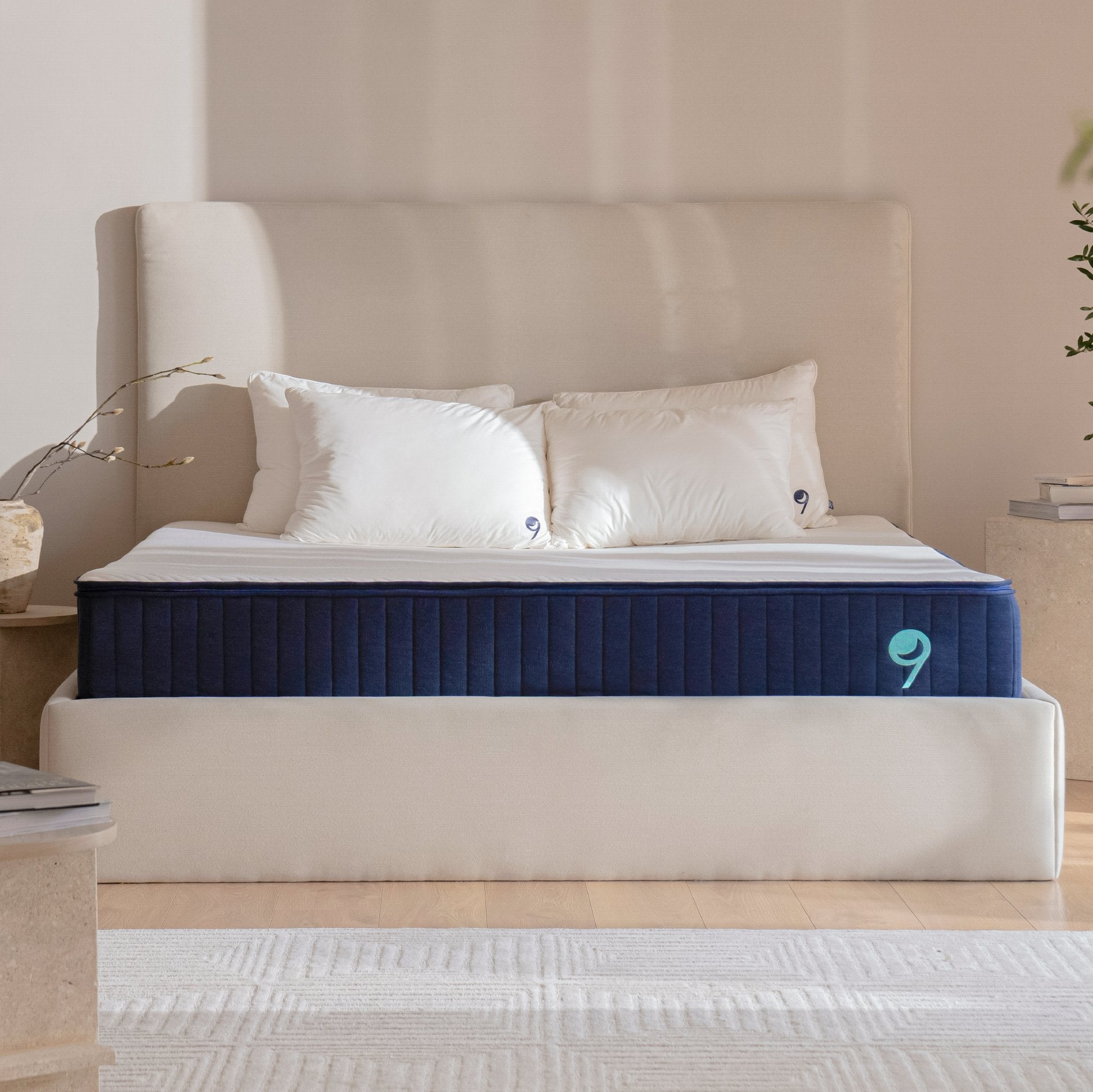
Synthetic rubber mattresses are made from synthetic rubber, primarily Polyurethane foam – a common and long-standing industrial material in the mattress manufacturing industry. This type of mattress has its own advantages and disadvantages, specifically as follows.

What are the advantages of synthetic rubber?
Low price
Synthetic rubber mattresses are an optimal solution for the material and cost limitations of natural rubber mattresses. With a composition mainly of chemical substances, this type of mattress has a reasonable price, suitable for a wide range of customers. Product prices vary, depending on factors such as brand, material, and size.
High elasticity
Elasticity is one of the important criteria when choosing a suitable mattress. Synthetic rubber mattresses stand out with their firmness and better elasticity compared to many other types of mattresses on the market. The special structural design of the mattress helps increase the contact area with the body, supporting even weight distribution, providing a soft feeling, and helping to achieve deeper sleep.
High durability and safety
Synthetic rubber mattresses have high durability due to their strong structure and tight chemical bonds, resisting sagging and air leakage, ensuring long-term use. The Polyurethane material is safe, limits dust accumulation, and protects health. In addition, the mattress provides good body support, especially suitable for people with lower back pain or bone and joint conditions.
Provides softness and comfort for users
Mattresses play an important role in supporting sleep and indirectly affecting health. A mattress that provides softness and comfort is considered a criterion for a quality product. Synthetic rubber mattresses, with their main component being synthetic chemicals, can adapt to body shape, are waterproof, and support blood circulation. Many users comment that the mattress is soft, reduces noise when turning over, provides a comfortable feeling, and helps them fall asleep more easily.

Disadvantages of synthetic rubber mattresses
Synthetic rubber mattresses were developed to replace natural rubber mattresses and are suitable for many customer segments. However, their durability and elasticity are still inferior to natural rubber mattresses.
In addition, because they are made from synthetic chemical raw materials, there are many low-quality mattresses on the market that can affect health. Therefore, users should research carefully before choosing a product.
3.2. Advantages and disadvantages of natural rubber mattresses
Natural rubber is the original material for developing and creating other rubber materials, so it certainly possesses excellent advantages to consider. So, what are the advantages and disadvantages of natural rubber mattresses?
Advantages
- 100% safe and benign: The natural origin gives natural rubber mattresses absolute safety. The mattress has excellent antibacterial and dust-resistant properties, is benign for all skin types and respiratory systems, including children. This is an ideal mattress for people with bone and joint pain, back pain, or children whose height is developing, thanks to its high elasticity and firm, stable surface.
-
High durability: The lifespan of a rubber tree can be up to nearly 100 years, so natural rubber mattresses often have a lifespan of up to 20 years while still maintaining product quality.
- Environmentally friendly: Compared to rubber materials produced from petroleum, natural rubber mattresses with 100% natural origin are very environmentally friendly.
- High breathability: The holes on the mattress surface allow air to circulate continuously. Therefore, natural rubber mattresses are famous for their excellent breathability and anti-mold properties. Natural rubber mattresses are very suitable for hot climates like ours.
Disadvantages of natural rubber mattresses
The only disadvantage of natural rubber mattresses is perhaps their high price due to the premium and scarce raw materials.
In addition, some customers have reacted that natural rubber mattresses often have a rather strong odor when newly purchased.
3.3. Should I buy a synthetic rubber mattress or a natural rubber mattress?
Each material has very clear advantages and disadvantages, and it can be said that these two types of mattresses complement each other. Therefore, depending on which criterion you prioritize, you will be able to determine whether a natural rubber mattress or a synthetic rubber mattress is suitable for you.
If you are environmentally conscious and prioritize material safety, or if you and your family have sensitive constitutions, then boldly invest in a natural rubber mattress.
If you want to buy a rubber mattress but your budget is limited, then a synthetic rubber mattress is the perfect choice for you. Although it is much cheaper, a synthetic rubber mattress still possesses the core advantages of a rubber mattress, such as high elasticity, long lifespan, etc.
In addition to the two materials mentioned above, you can also consider Memory foam, which is produced and integrated into Ru9's Foam mattress and Topper mattress topper product lines.
4. What are the classifications and applications of synthetic rubber?
4.1. What is styrene-butadiene rubber (SBR)?
Multipurpose rubber possesses outstanding advantages in terms of wear resistance, heat resistance, and anti-aging properties, while also being an effective electrical insulator. However, its low-temperature processing capability and elasticity are limited. Thanks to these characteristics, multipurpose rubber is widely used in industrial fields such as the production of inner tubes, tires, conveyor belts, seals, and other technical rubber products.
4.2. What is polybutadiene rubber (BR)?

This type of rubber is often blended with SBR or NR instead of being used alone, to improve its properties. It has good flexibility at low temperatures and high elasticity. Polybutadiene rubber is widely used in the production of tires, clutches, engine bearings, conveyor belts, seals, and other technical rubber products.
4.3. Isoprene (IR) synthetic rubber
This type of rubber has more uniform, clean, and transparent properties. They are commonly used in technical products such as construction components, heating pipes, cooling hoses for vehicles, high-performance tires, and tools for the food industry.
4.4. Acrylonitrile butadiene rubber (NBR)

This type of rubber is notable for its resistance to oil, fuel, abrasion, and heat. It is used in engine parts, oil hoses, technical products, mats, discs, seals, rollers, and food packaging such as milk.
4.5. Chloroprene rubber (CR)
This type of rubber has grease resistance, flame resistance, and also withstands the effects of oil, aging, abrasion, and weather. As a result, it is widely used in conveyor belts, drive belts, clutches, technical products, cables, and pneumatic suspension systems.
4.6. What is butyl (IIR) synthetic rubber?

This type of rubber has anti-aging, ozone, and chemical resistance properties, while also possessing good thermal insulation and mechanical properties. With low gas permeability and high abrasion resistance, it is used in products such as automotive tubes, seals, membranes, tire liners, rubber fabrics, hoses, and cable insulation materials.
In summary, synthetic rubber plays an important role in the development of many fields. We hope that the above sharing has helped you better understand synthetic rubber and the advantages and disadvantages of synthetic rubber mattresses, thereby choosing the right product for your needs.
See more:
- Which synthetic rubber mattress brand is good and most worth buying today?
- Which rubber mattress is good? Natural, blended, or synthetic rubber mattress?
- What is memory foam? Advantages and disadvantages of this material
- What is synthetic rubber? Is synthetic rubber the same as artificial rubber?


