









Which Mattress Is Best for Back Pain and Good for Your Spine?
Choosing the right mattress for back pain is essential for supporting your spine, easing discomfort, and improving sleep quality. A mattress that's genuinely good for your spine doesn't just feel comfortable — it helps your body recover and reduces back-related health issues. If you're waking up with back pain every morning, it might be time for a new mattress. Let's find out with Ru9 how to choose the right mattress for back pain.
1. Which type of mattress can cause back pain?
An unsuitable mattress can lead to back pain and directly affect both your physical health and mental wellbeing. Common mattress-related causes of back pain include:
An uneven mattress surface, or one placed on an uneven base, which throws the spine out of alignment
A mattress that's too firm or too soft fails to provide adequate support, leading to muscle strain and nerve compression that trigger back pain
An old mattress with sagging spots can no longer offer the support your spine needs, causing it to curve unnaturally and creating back problems
A low-quality mattress lacks the durability and comfort to properly support the body, affecting both sleep quality and overall health
These issues don't just cause back pain — they also take a toll on your overall quality of life.
2. Which type of mattress is good for the spine and for back pain?
The most worthwhile mattress types for back pain today are: spring mattresses, natural latex mattresses, and high-density foam mattresses. Let's explore the specific characteristics of each type of mattress that's good for the spine with Ru9!
2.1. Spring mattresses
Spring mattresses offer outstanding elasticity thanks to their tightly interconnected internal spring system. High-quality spring mattresses are typically made from steel, delivering strong elasticity and durability that supports the back and the entire body, resulting in a comfortable sleep.
There are currently three popular types of spring mattresses on the market:
Pocket spring mattress: Each spring is individually wrapped in its own fabric pocket, allowing every spring to move independently and provide targeted support. This ensures each support zone works separately without affecting neighboring areas. Pocket spring mattresses typically feature 3 to 7 key spinal support zones, delivering a soft, bouncy, and comfortable feel for the back.
Continuous coil spring mattress: The spring system is interconnected into continuous sheets arranged seamlessly within a steel frame, providing sturdy, stable back support and a comfortable feel.
Bonnell spring mattress: Built from multiple interlocking spring coils that form a naturally supportive system for the spine. With moderate firmness, this type of mattress helps reduce back pain during sleep, offering comfort to the user.
You can check out Ru9's pocket spring mattress combined with foam: how much does the Ru9 Hybrid mattress cost?
2.2. Latex mattresses that are good for back pain
When it comes to mattresses that are good for the spine, latex mattresses — especially natural latex mattresses — are highly rated by experts for their spinal support. This type of mattress maintains consistent softness without sagging or deforming over time, effectively protecting and supporting the spine. Its moderate softness helps prevent spinal curvature and delivers a comfortable feel during use.
Read more:
What is a synthetic latex mattress? Can people with back pain sleep on a synthetic latex mattress?
For back pain, should you choose a soft latex mattress or a natural latex mattress?
What is an artificial latex mattress? Who should buy an artificial latex mattress?
What is a soft latex mattress? Why are soft latex mattresses so affordable? Is a soft latex mattress suitable for people with back pain?
2.3. High-density foam mattresses
High-density foam mattresses are highly regarded for back pain relief thanks to their ability to contour to and evenly distribute pressure across the body's curves — especially at the shoulders, lower back, and hips, the main pressure points during sleep. The higher the foam density (typically 40kg/m³ or above for premium lines), the better the elasticity and durability, reducing sagging over time — a common cause of spinal misalignment with long-term mattress use.
Unlike ordinary sponge-type foam (which tends to trap heat and sag quickly), advanced foam mattresses typically feature an open-cell structure for better breathability, along with a multi-layer design with distinct support zones (usually 3 to 5 zones) for the head, shoulders, back, hips, and legs — helping keep the spine in a natural, neutral position throughout the night.
Read more: Ru9's Original Pro foam mattress — a high-density foam mattress with 3 independent support zones, specifically designed for people with back pain.
2.4. Quick comparison table of the 3 mattress types
Criteria
Spring mattress
Natural latex mattress
High-density foam mattress
Spinal support
Good, especially pocket spring types
Excellent, stable long-term
Excellent, contours to body curves
Elasticity
High, bouncy feel
Moderate, gentle
Low to moderate, contouring rather than bouncy
Breathability
Good (airflow between springs)
Good
Good if premium open-cell foam
Durability / sag resistance
Average — elasticity can decline over time with lower-quality options
High, minimal deformation
High if density is ≥ 40kg/m³
Best suited for
Average to heavier body weights
All body weights
Lighter to average body weights
Reference price range
Mid-range
Mid to high
Mid to high
(This table is a general reference; specifics vary depending on the product line and manufacturing technology of each brand.)
3. How to choose a mattress for back pain that's good for the spine
Choosing the right mattress for your spine is essential for protecting your bone and joint health. Here are a few criteria to help you easily choose the ideal mattress for back pain relief:
3.1. Don't choose a mattress that's too firm
Back pain is often related to spinal issues. To reduce and prevent back pain while sleeping, avoid mattresses that are too firm. Instead, prioritize mattresses with good elasticity and solid spinal support, so you feel comfortable and at ease throughout your sleep.
Read more: Top 9 firm mattresses for back pain worth buying today!
3.2. Don't choose a mattress that's too soft
A mattress that's too soft doesn't provide enough support for the spine and skeletal frame, which can lead to spinal issues. When choosing a mattress that's good for the spine, look for one with moderate softness — supportive enough to be comfortable without feeling restrictive.
3.3. Choose a mattress for back pain that matches your body weight and size
Many people focus only on the mattress size while overlooking their own body size and weight, resulting in choosing an unsuitable mattress. For example, heavier individuals who choose an overly soft mattress may find it lacks the elasticity needed to properly support the body during sleep.
Read more: What mattress sizes are available? How to choose the right mattress size for your body type
3.4. A firm mattress for back pain needs good breathability
A mattress with good breathability not only feels cooler and more comfortable to sleep on, but also helps extend the mattress's lifespan and ensures effective body support.
3.5. What mattress material is best for back pain?
To choose a mattress that's good for the spine, firmness and material are two key factors. Choose a mattress made from highly elastic material to ensure it can effectively support the back and spine.
3.6. Choose a reputable mattress retailer
A mattress that's good for the spine also comes from major brands with clear quality certification and warranties. A reputable mattress retailer not only provides quality products but also commits to optimal health support — especially for the spine — helping users achieve deep, comfortable sleep.
Not sure if your current mattress is the right fit? You can use Ru9's Mattress Finder tool in the corner of your screen to get a personalized recommendation based on your body weight, sleep position, and back pain concerns.
4. Ru9 — a mattress brand that's good for back pain
It's safe to say that a mattress suited to your spine is key to improving sleep quality. This is especially true for people dealing with back pain from various causes, for whom the right mattress becomes even more essential to support and protect spinal health.
Ru9 is a leading mattress brand in Vietnam, specializing in advanced sleep solutions for people with back pain. If you're looking for a mattress that's good for the spine or for back pain, here are 3 Ru9 product lines worth considering:
Original Pro mattress: A high-density foam mattress with 3 support zones for the shoulders, hips, and legs, evenly distributing pressure and maintaining a natural sleep posture. Best suited for those who enjoy a contouring, plush feel.
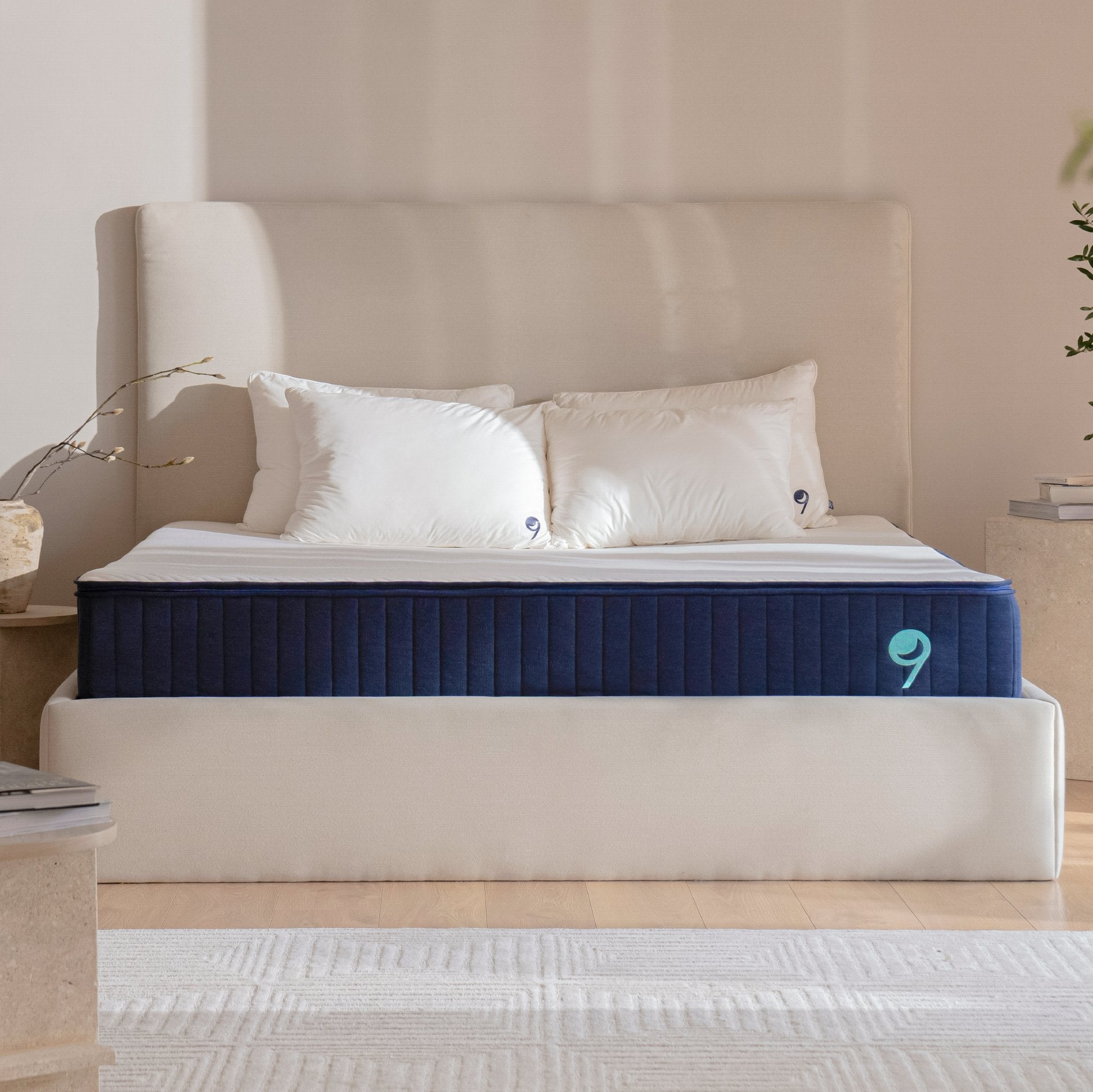
Hybrid mattress: Combines independent pocket springs with premium foam layers. The pocket springs allow each support point to work independently with no motion transfer when you move — so there's no need to worry about noise or shaking — while the foam layers add firm support along with body-contouring comfort.
Nest mattress: Focused on stability, ideal for those who prefer a firm feel or are already used to sleeping on a firm mattress. Its slim, compact design — about 15cm thick — makes it versatile for a wide range of uses.
All three lines offer solid spinal support but differ in feel: the Original Pro is soft and contouring, the Hybrid is firm with a bit of bounce and stays quiet, while the Nest is stable and lightweight for those used to firmer surfaces.
This article has covered the types of mattresses that can worsen back pain, along with the criteria for choosing a mattress that's good for the spine and suited to people with back pain. If you're looking for a mattress to help with back pain but aren't sure which one to choose, come to Ru9 for detailed advice and to find the product that's right for you.
11/04/2025

A detailed comparison of memory foam and natural latex mattresses
Latex mattresses come in many types, among which memory foam and natural latex are the two most well-known and widely used. However, if you don't fully understand the characteristics of each type, you might mistakenly choose an unsuitable product. This article will help you compare memory foam mattresses and natural latex mattresses to make an informed decision.
1. What is a memory foam mattress?
There is a common misconception that memory foam mattresses are made from the sap of young rubber trees. In reality, memory foam mattresses are a type of synthetic latex mattress made from 100% high-density Polyurethane foam. This type of mattress is extremely popular in Europe and North America.
In addition to Polyurethane foam as the main component, memory foam mattresses are also supplemented with some additives to increase material density, creating a difference compared to natural latex mattresses. Memory foam mattresses have good elasticity, quickly returning to their original state when no force is applied.
1.1. Advantages of memory foam mattresses
Memory foam mattresses possess many outstanding advantages such as:
Memory foam mattresses are a perfect choice for those who prefer to sleep on their side or back. This is because memory foam mattresses contour to the body's curves, while also helping to reduce pressure on various body points. Compared to other mattress types, memory foam mattresses offer a more comfortable sleeping experience.
Memory foam mattresses are made from polyurethane foam, which is safe and non-irritating.
Memory foam mattresses resist sagging and oxidation, even after many years of use.
Memory foam mattresses are excellent at reducing motion transfer and noise, providing a quiet sleep for you and your family.
Memory foam mattresses are significantly lighter than natural latex mattresses, allowing for flexible movement and easy cleaning.
Memory foam mattresses are typically very affordable and accessible.
1.2. Disadvantages of memory foam mattresses
Despite the aforementioned advantages, memory foam mattresses still have some limitations, such as:
Memory foam mattresses are made from synthetic materials, making them less environmentally friendly and not as safe for health as natural latex mattresses.
The mattress has a short lifespan, is prone to sagging or damage, and is only suitable for short-term use.
Memory foam mattresses are quite soft, so they are not suitable for those who prefer a firm mattress or a mattress with a solid surface.
See more:
Is a memory foam mattress a Memory Foam mattress? Which brand of memory foam mattress should you buy?
What is synthetic rubber? How does synthetic rubber differ from memory foam?
2. What is a natural latex mattress?
Natural latex mattresses are premium latex mattresses and are the most popular on the market. Natural latex mattresses are made entirely from natural rubber sap, undergoing a process of cleaning, refining, and combining with catalysts before being molded according to standards. The 100% natural composition gives natural latex mattresses superior antibacterial properties and makes them extremely safe and gentle for users' health.
2.1. Advantages of natural latex mattresses
As a premium mattress type, natural latex mattresses have many outstanding advantages such as:
Natural latex mattresses help maintain the spine's natural posture while effectively supporting the body's curves. Therefore, natural latex mattresses are very suitable for people with spinal pain, those with herniated discs, or children who are growing in height and physique.
Natural latex mattresses have optimal antibacterial, anti-insect, and anti-mold capabilities, ensuring safety and comfort for users.
The production process of natural latex mattresses does not generate emissions, making them very environmentally friendly.
Natural latex mattresses have a long lifespan, from 10 to 20 years if properly maintained. The mattress retains its elasticity, does not sag or liquefy over time.
2.2. Disadvantages of natural rubber mattresses
Natural latex mattresses are relatively expensive
Natural latex mattresses are quite heavy, causing inconvenience when moving and cleaning
The mattress can wear out quickly if exposed to gasoline or oil
See more:What is a synthetic latex mattress? When should you buy a synthetic latex mattress and when should you buy a natural latex mattress?
3. Comparing memory foam and natural latex mattresses
Both memory foam and natural latex mattresses are popular choices due to their distinct characteristics. However, each type has different advantages and disadvantages, suitable for various usage needs. To help you get an overview and easily compare them, here is a detailed analysis of these two mattress types.
Criteria
Natural Latex Mattress
Memory Foam Mattress
Composition
Pure natural latex
This material is extracted from petroleum and is often mixed with a certain proportion of natural latex.
Elasticity
Excellent
Average
Weight
Quite heavy
Light
Antibacterial properties
Has natural antibacterial properties.
None
Breathability
Good
Less effective
Price
High
Low
Durability
High
Average
Odor
Has a characteristic rubber smell, but it will quickly dissipate after the packaging is opened.
Some low-quality products, not properly treated, may have a strong or petrochemical odor.
4. Should you choose a memory foam or natural latex mattress?
Both memory foam and natural latex mattresses have their own advantages. Therefore, you can choose according to your needs, preferences, and budget. If you prioritize support, care about health, and are willing to invest more, then a natural latex mattress would be the ideal choice. If you need a mattress that provides all the basic features of a latex mattress but at a more accessible price and you're not overly concerned about durability, then a memory foam mattress is for you.
Additionally, you should consider other factors such as:
Mattress size: Choose a mattress that fits your bedroom and your height for comfortable use, optimal space, and cost savings.
Brand: A mattress is a high-value product, used for a long time, and directly affects health and well-being. Therefore, prioritize purchasing from reputable brands to ensure quality and durability.
5. Ru9 - A quality mattress brand for your sleep
Currently, there are many quality and reputable mattress brands on the market, but Ru9 stands out as one of the leading choices in Vietnam. With a distribution system spanning all 63 provinces and cities, Ru9 provides quality products that ensure the safety and health of users.
A special feature of Ru9 is that its fabric material has been tested according to OEKO-TEX STANDARD 100, a globally recognized certification for health safety. Furthermore, Ru9 is the first mattress brand in Vietnam to achieve the international CertiPUR-US certification, affirming its commitment to providing high-quality products free of harmful chemicals.
Ru9 believes that a good night's sleep is the core factor in improving the quality of life. Therefore, if you are looking for a comfortable, supportive, and healthy mattress, Ru9 will definitely be a worthwhile choice. Let Ru9 accompany you, bringing you good nights and refreshed spirits every day!
Above is the information comparing memory foam and natural latex mattresses, hoping to help you choose the right product.
See more:
What is a synthetic rubber mattress? Comparing memory foam and synthetic rubber mattresses: which is better?
What is synthetic rubber? Advantages, classifications, and applications.
11/04/2025

Is taking 2 sleeping pills okay? Are sleeping pills harmful?
Is it okay to take 2 sleeping pills, is it dangerous? Ru9 will reveal to you the correct answer in the following article content.
28/03/2025

What is memory foam? Learn the production process of memory foam mattress
You wonder what Memory foam material is, is it good for health? The choice of mattress material is important. Let's learn about Memory foam with Ru9 for a good night's sleep
21/03/2025

How to effectively clean a latex mattress at home for all stains
Latex mattresses are among the popular products on the market thanks to their excellent elasticity and superior breathability. Regular mattress cleaning not only helps extend its lifespan but also ensures the user's health. However, cleaning a latex mattress at home requires the right method and some important considerations. Please refer to the article below.
1. Can latex mattresses be washed?
Washing or cleaning a latex mattress at home is entirely possible, but proper cleaning is not simple. Due to its open-cell structure with millions of tiny holes, if cleaned incorrectly, water can seep in, damaging the mattress core's structure, causing it to lose its shape, reduce elasticity, and support capabilities.
Additionally, latex mattresses are often heavy and bulky, making self-cleaning more difficult. To ensure the mattress is properly cleaned and maintains its original quality, you should use a professional mattress cleaning service, which helps extend the product's durability and lifespan.
However, if you still want to try cleaning your latex mattress at home, refer to the simple, effective steps below.
See more:
Can memory foam mattresses be washed? How to wash memory foam mattresses without damaging them
Can you wash spring mattresses at home? Simple spring mattress washing process tips
Effective ways to clean foam mattresses at home without losing their shape
2. How to clean a latex mattress at home when it gets wet
When a latex mattress gets wet, it's quite easy to clean at home. Just follow these three steps:
Step 1: Remove the bedsheets and mattress cover for separate washing to ensure cleanliness and prevent stain spread.
Step 2: Use a clean, dry cloth to absorb as much water as possible from the wet area of the mattress, helping to reduce moisture quickly.
Step 3: Place the mattress in a dry, well-ventilated area, then use a fan to blow directly onto the wet area to speed up the drying process and prevent mold.
3. How to clean a latex mattress at home when it has stubborn stains
When a latex mattress has stubborn stains like coffee or blood, you need to follow more complex cleaning steps. Refer to the washing process below to clean it thoroughly while ensuring the longevity of your latex mattress.
Step 1: Dry pre-treatment before washing the latex mattress
Move blankets, pillows, stuffed animals, and other items on the bed aside for easier cleaning.
Remove the bed sheets and mattress cover, then wash them by hand or machine using normal methods.
Use a dry cloth to gently wipe the mattress surface to remove the initial layer of dust.
Continue by washing a cloth with warm water, wringing it dry, then wiping the mattress again for a more thorough cleaning.
Step 2: Wash and clean the mattress
1. Check for stains: Identify yellow stains or stubborn dirt on the mattress.
2. Clean a latex mattress at home when it has stubborn stains using one of the following methods: salt, alcohol, laundry detergent, dish soap, baking soda, baby powder,...
Salt: Sprinkle salt on the stain, wait for it to absorb moisture, then wipe clean. You can also use vinegar or odor-neutralizing essential oils.
Alcohol: Dilute, pour onto the stain, blot with a cloth, and let dry with a fan.
Laundry detergent: Mix into a paste, gently rub onto the stain, wipe clean with a dry cloth.
Dish soap: Mix with vinegar and water, pour onto the stain, let sit for 30 minutes, then wipe clean.
Baking soda: Sprinkle directly, let sit for 30 minutes, then wipe dry.
Baby powder: Sprinkle on the stain, wait 30 minutes, then vacuum clean.
3. Deep clean embedded dirt:
Spread a large, damp, wrung-out cloth over the mattress surface.
Gently beat the cloth with a stick to dislodge internal dust and allow it to be absorbed by the cloth.
This method helps prevent dust from spreading into the air and ensures safety during cleaning.
Step 3: Clean the latex mattress with a vacuum cleaner
Use a vacuum cleaner to remove any remaining dirt from the crevices of the mattress, ensuring the mattress is thoroughly cleaned and no dust remains hidden inside. This method also helps to vacuum up any powdery cleaning agents and aids in effective mattress drying.
Step 4: Add fragrance and sanitize the latex mattress
After cleaning the latex mattress at home, drip a few drops of antibacterial essential oil, such as lavender, peppermint, or lemongrass, onto the mattress to deodorize and create a pleasant fragrance.
Alternatively, dilute essential oil with water, pour it into a spray bottle, shake well, and lightly spray onto the mattress surface. This method helps eliminate odors thoroughly and repels any remaining bacteria in the mattress.
Step 5: Naturally air dry the mattress
Air dry the mattress in a well-ventilated area to eliminate mold and odors. Place the mattress on a chair or stand to avoid direct contact with the ground. If drying under direct sunlight, check frequently to prevent high temperatures from affecting the quality and durability of the mattress.
4. Notes when cleaning a latex mattress at home
When cleaning a latex mattress at home, avoid letting water penetrate deep into the mattress core, as this will make the mattress take longer to dry, creating conditions for bacteria and mold to grow. In the long run, the mattress core will easily decay, deform, and lose its original shape.
Avoid harsh scrubbing or using sharp objects when cleaning the mattress, as latex can easily be damaged if subjected to improper forces. Use a soft brush or specialized sponge and clean gently to protect the surface, prevent damage to the structure, and extend the mattress's lifespan.
Avoid using chemical detergents such as soap, laundry powder, or bleach, as they can break down the latex structure, affecting the mattress's support capacity and durability.
Do not expose latex mattresses directly to sunlight, as high temperatures can cause the mattress to harden and reduce its elasticity. Ideally, place the mattress in a cool, well-ventilated area, away from harsh sunlight, and ensure it is completely dry before continued use.
Using a mattress protector is an effective solution to prevent dust, limit water absorption, and avoid stains from food, drinks, or bedwetting. A mattress protector is easy to remove, wash, and dry quickly, saving time and effort compared to cleaning the entire mattress.
See more: How to wash a mattress topper simply and effectively
Above are the instructions and notes on how to clean a latex mattress at home. Hopefully, through this article, you will know how to properly care for and clean your mattress, helping to keep it clean, durable, and extend its lifespan.
However, if you find cleaning a latex mattress quite difficult, especially if you lack tools, materials, or time, consider using a professional mattress cleaning service. This service will help you save cleaning time and ensure the long-term durability of your expensive latex mattress.
19/03/2025

Instructions on how to clean a mattress at home, the easiest and simplest way
After a long and stressful day at work, everyone wants to relax on a clean, soft mattress to enjoy a full night's sleep and restore energy. However, if the mattress is not cleaned regularly, dust and bacteria can affect health and sleep quality. Therefore, proper mattress cleaning at home is essential. In today's article, Ru9 will provide a guide on how to clean a mattress at home simply and effectively to keep it looking new. Let's follow along!
1. Remove and wash bed linens
Step 1: Remove pillows, blankets, and decorative items from the bed
Before cleaning the mattress, clear all items from the bed, such as sleeping pillows, decorative pillows, blankets, toys, and other items. Then, remove pillowcases and duvet covers for washing.
Step 2: Remove the fitted sheet
After completing step 1, remove the fitted sheet and mattress protector, then wash them.
Step 3: Clean all your bed linens and sheets
For effective cleaning of bed linens, you should choose a specialized wash cycle for sheets and pillowcases on your washing machine. Additionally, a small tip is to use hot water and set it to a drying cycle to kill bacteria and dust mites hidden in the mattress.
2. Clean and deodorize the mattress
Step 1: Vacuum
After extended use, mattresses can accumulate dust, hair, food crumbs, and small debris. To clean them, use a vacuum cleaner with a brush attachment to effectively sweep away dirt from the seams and corners of the mattress.
Step 2: Address liquid spills
To deal with liquid stains like this, prepare an absorbent cloth and gently blot the wet area. Be careful not to rub too hard, as this can cause the liquid to penetrate deeper into the mattress.
Step 3: Remove stains from the mattress
To clean mattresses with stubborn stains, prepare a solution of 2 tablespoons of hydrogen peroxide, 1 tablespoon of dish soap, an old toothbrush, and a damp cloth.
Dissolve the solution, then dip the toothbrush into the mixture and gently scrub the stain. Finally, use a damp cloth to wipe clean the treated area.
Note: Use only enough solution to avoid excessive saturation of the mattress.
Step 4: Remove biological stains with an enzymatic cleaner
Enzymatic cleaners can break down proteins in blood, urine, sweat, vomit, and effectively treat grease stains and other biological stains, making them a simple yet highly effective way to clean mattresses.
To remove these stains, spray a small amount of the solution onto a clean cloth, then gently dab the cloth onto the stain and leave it for 15 minutes. Note: Do not spray the solution directly onto the mattress. Continue to dab with the same cloth to remove the stain. Finally, blot the treated area thoroughly with a clean cloth soaked in cold water.
Only use enough solution for each stain.
Step 5: Sprinkle baking soda on the mattress
Baking soda is an effective solution for cleaning and deodorizing mattresses. Simply sprinkle an even layer of baking soda over the mattress surface and leave it for 30 minutes. If you want a pleasant fragrance, you can mix a few drops of essential oil with the baking soda before sprinkling.
Step 6: Vacuum the mattress again
After letting the baking soda sit on the mattress for about 30 minutes to absorb odors, use a vacuum cleaner to thoroughly remove all the baking soda from the mattress to ensure it is completely clean.
Step 7: Air out the mattress
Proper mattress cleaning should include drying methods that do not damage its structure. After cleaning the mattress, place it in a well-ventilated area to help it dry and air out. You can also open windows and curtains to allow sunlight in, as UV rays from the sun kill bacteria and mold, eliminate odors, and help the mattress dry faster.
3. Re-cover and make the bed
Step 1: Flip the mattress
After some use, you should flip your mattress to ensure that the indentation is evenly distributed. Flip or rotate your mattress every 3-6 months to keep it flat and durable.
Step 2: Install a mattress protector
A mattress protector helps prevent water, dust, and other agents from adhering to the mattress. This makes mattress cleaning simpler and more convenient.
Step 3: Make the bed again
After completing the above steps, make the bed again, put on pillowcases, and arrange any decorative items on the bed.
Hopefully, this guide on how to clean a mattress will help you easily clean your mattress at home. If you have any questions, don't hesitate to leave a comment below!
See more:
How to wash a mattress topper simply, quickly, and still super clean
Can a spring mattress be washed? How to clean a spring mattress effectively without affecting its quality
How to clean a mattress when a child wets the bed simply and odor-free
How to wash a memory foam mattress at home simply without damaging its structure
2 ways to clean a foam mattress at home quickly
18/03/2025


