









Bị ghost là gì? Ghost trong tình yêu là gì?
Ghost là gì? Đây là một thuật ngữ ngày càng phổ biến trên mạng xã hội, đặc biệt trong bối cảnh các mối quan hệ hiện đại diễn ra nhanh chóng. Bên cạnh việc tìm hiểu ghosting là gì, nhiều người cũng bắt đầu quan tâm đến những tình huống cụ thể như bị ghost là gì hay ghost trong tình yêu là gì. Việc một người đột ngột biến mất khỏi cuộc trò chuyện mà không có lời giải thích không chỉ gây khó hiểu mà còn trở thành trải nghiệm khá quen thuộc với nhiều người hiện nay. Vậy thực chất ghost là gì và vì sao hiện tượng này lại xuất hiện ngày càng nhiều?
1. Ghost là gì
Ghost là gì? “Ghost” vốn là một từ tiếng Anh mang nghĩa “bóng ma”, nhưng trong ngữ cảnh hiện đại, đặc biệt trên mạng xã hội, thuật ngữ này được dùng để chỉ hành vi đột ngột cắt đứt liên lạc với ai đó mà không đưa ra bất kỳ lời giải thích nào. Nói một cách đơn giản, ghosting là khi một người “biến mất” khỏi cuộc trò chuyện hoặc mối quan hệ như thể chưa từng xuất hiện.
Ngoài ra, bạn còn có thể nghe đến các thuật ngữ liên quan như ghosted và ghoster. Ghosted chỉ trạng thái bị ghost, còn ghoster là chỉ người đi ghost người khác.
Về nguồn gốc, “ghosting” bắt đầu được sử dụng trong các cộng đồng trực tuyến từ cuối những năm 1990. Khi việc giao tiếp qua internet ngày càng phổ biến, hành vi ngừng liên lạc một cách im lặng cũng xuất hiện nhiều hơn và dần được gọi bằng cái tên này. Đến nay, thuật ngữ này đã trở nên quen thuộc, đặc biệt trong bối cảnh hẹn hò hay mạng xã hội như facebook, instagram.
Trong tình yêu, ghosting thường xảy ra ở giai đoạn tìm hiểu hoặc hẹn hò. Một người có thể bất ngờ ngừng nhắn tin, không phản hồi và không đưa ra bất kỳ lời chia tay nào. Sự im lặng này khiến đối phương rơi vào trạng thái mơ hồ, không biết mối quan hệ đã kết thúc hay chưa.
Việc bị ghost không chỉ đơn thuần là mất kết nối, mà còn ảnh hưởng đến cảm xúc của người trong cuộc. Nhiều người có thể cảm thấy hụt hẫng, khó hiểu, thậm chí tự nghi ngờ bản thân vì không nhận được một lời giải thích rõ ràng. Chính sự “không có hồi kết” này khiến ghosting trở thành một trải nghiệm khó chịu trong các mối quan hệ hiện đại.
2. Nguyên nhân bị ghost trong tình yêu là gì?
Bị ghost trên Facebook hay bị ghost trong tình yêu không phải là chuyện hiếm gặp, đặc biệt trong bối cảnh các mối quan hệ ngày nay thường bắt đầu và phát triển rất nhanh trên môi trường online. Có nhiều nguyên nhân khác nhau dẫn đến hành vi này, chủ yếu đến từ cách con người kết nối, kỳ vọng và phản ứng trong quá trình tìm hiểu.
Tìm hiểu quá nhanh
Khi mối quan hệ bắt đầu qua tin nhắn, hai người thường chỉ nhìn thấy một phần hình ảnh của đối phương. Điều này dễ tạo ra kỳ vọng lý tưởng hóa. Tuy nhiên, khi gặp ngoài đời, nếu cảm nhận không giống như tưởng tượng, một số người sẽ chọn im lặng và rút lui thay vì nói rõ lý do.
Có quá nhiều lựa chọn
Các ứng dụng hẹn hò mang đến nhiều cơ hội kết nối cùng lúc. Điều này khiến một số người không đặt quá nhiều cảm xúc vào một mối quan hệ cụ thể. Khi cảm thấy không còn phù hợp, họ có xu hướng chuyển sang đối tượng khác mà không cần giải thích hay kết thúc rõ ràng.
Tâm lý né tránh hoặc tự bảo vệ
Không phải ai cũng sẵn sàng đối diện với những cuộc trò chuyện khó xử, đặc biệt là khi phải nói lời từ chối. Vì vậy, ghosting trở thành một cách “rút lui an toàn” để tránh cảm giác áy náy, căng thẳng hoặc xung đột.
Mục đích không rõ ràng
Ngay từ đầu, mỗi người có thể bước vào mối quan hệ với kỳ vọng khác nhau. Có người tìm kiếm sự nghiêm túc, trong khi người khác chỉ muốn trò chuyện hoặc giải trí. Khi không có sự trao đổi rõ ràng, việc một bên đột ngột ngừng liên lạc là điều dễ xảy ra.
3. Dấu hiệu cho thấy bị ghost là gì?
Không phải lúc nào ghosting cũng diễn ra một cách “biến mất ngay lập tức”. Trong nhiều trường hợp, bạn có thể nhận ra dấu hiệu bị ghost qua những thay đổi nhỏ trong cách đối phương giao tiếp như:
Giao tiếp trở nên lạnh nhạt: Bạn thường là người chủ động nhắn tin trước, nhưng không nhận lại sự tương tác tương xứng. Cuộc trò chuyện thiếu sự kết nối và dần trở nên một chiều.
Phản hồi chậm và ngắn: So với trước đây, đối phương trả lời tin nhắn chậm hơn, nội dung cũng ngắn gọn, qua loa. Điều này cho thấy họ không còn đầu tư vào cuộc trò chuyện.
Thường xuyên hủy hẹn: Những kế hoạch gặp mặt liên tục bị trì hoãn hoặc không bao giờ được thực hiện. Đây có thể là dấu hiệu cho thấy họ đang né tránh.
Thay đổi trên mạng xã hội: Bạn nhận ra mình bị hạn chế tương tác, thậm chí bị chặn hoặc đối phương không còn tương tác như trước. Đây là dấu hiệu rõ ràng cho thấy mối quan hệ đang bị cắt đứt.
Tuy nhiên, những biểu hiện này không phải lúc nào cũng đồng nghĩa với việc bạn chắc chắn bị ghost. Đôi khi, đó chỉ là dấu hiệu của việc đối phương đang bận hoặc gặp vấn đề cá nhân. Cách tốt nhất là trao đổi trực tiếp để hiểu rõ tình trạng mối quan hệ.
4. Nên làm gì khi bị Ghost?
Bị ghost là trải nghiệm không dễ chịu, đặc biệt khi mọi thứ kết thúc mà không có lời giải thích. Tuy nhiên, cách bạn phản ứng mới là điều quan trọng để không bị ảnh hưởng quá lâu.
Không cố tìm câu trả lời: Việc liên tục suy nghĩ “tại sao họ biến mất” chỉ khiến bạn mệt mỏi hơn. Đôi khi, ghosting không có một lý do rõ ràng và bạn cũng không thể kiểm soát suy nghĩ của người khác.
Tôn trọng bản thân: Đừng vội tự trách hay nghĩ rằng mình chưa đủ tốt. Việc bị ghost không phản ánh giá trị của bạn, mà chỉ cho thấy đối phương không phù hợp.
Giữ bình tĩnh: Tránh nhắn tin trong trạng thái tức giận hoặc mất kiểm soát. Những phản ứng vội vàng thường không giúp giải quyết vấn đề, thậm chí còn khiến bạn cảm thấy tệ hơn.
Nhìn nhận như một bài học: Mỗi mối quan hệ đều mang lại trải nghiệm nhất định. Thay vì tiêu cực, hãy xem đây là cơ hội để hiểu rõ hơn về bản thân và điều bạn thực sự cần trong một mối quan hệ.
Tiếp tục mở lòng: Đừng để một lần bị ghost làm bạn mất niềm tin vào tình cảm. Khi giữ được tinh thần tích cực, bạn sẽ dễ dàng đón nhận những kết nối tốt hơn trong tương lai.
Lời kết
Ghost là gì không chỉ là một khái niệm đơn thuần mà còn phản ánh cách con người kết nối và rời đi trong các mối quan hệ hiện đại. Dù bạn đã từng tìm hiểu ghosting là gì hay trải qua cảm giác bị ghost là gì, điều quan trọng nhất vẫn là cách bạn đối diện và vượt qua nó. Một mối quan hệ kết thúc không rõ ràng có thể khiến bạn khó chịu, nhưng cũng là cơ hội để hiểu rõ hơn về bản thân và những gì mình thực sự cần. Thay vì để trải nghiệm này ảnh hưởng tiêu cực, hãy xem đó là một bước đệm để hướng đến những kết nối tích cực và phù hợp hơn trong tương lai.
Xem thêm:
Slay là gì? Cách dùng thuật ngữ slay
Bạch nguyệt quang là gì? Nên làm gì khi bị bạch nguyệt quang ghost?
Overthinking là gì? Cách ngừng overthinking khi bị ghost
16/04/2026

Decoding the Phenomenon of Waking Up at 3 AM: Understanding Sleep Science for Better Mornings
Waking up completely refreshed the next morning is the result of an uninterrupted night, not a miracle. However, if you frequently wake up at 3 AM and toss and turn unable to fall back asleep, your sleep quality and overall performance are directly affected.
This condition is not random; from a medical perspective, it is known as "sleep fragmentation," disrupting the body's natural resting structure.
We understand that individuals in their career advancement stage are always willing to purposefully invest in their quality of life to enhance performance. Sleep is the decisive foundation. Below is the clear connection between sleep science and your middle-of-the-night awakenings.
Sleep Fragmentation and Brain Arousal Threshold
The human body operates in sleep cycles lasting approximately 90 minutes. Around 3 to 4 AM, you typically enter a transitional phase from deep sleep (Slow Wave Sleep) to REM sleep (Rapid Eye Movement).
According to the assessment standards of the American Academy of Sleep Medicine (AASM), during this sensitive period, the brain's arousal threshold drops very low. The central nervous system becomes extremely sensitive to external stimuli, easily generating "micro-arousals" – sudden brain wave changes lasting from 3 to 15 seconds. When micro-arousals occur continuously, the recovery cycle is broken, creating a disruption that leaves the body exhausted the next morning.
Two Physical Factors Disrupting Sleep Structure
There are two main causes from the sleep environment that directly impact the brain's arousal threshold during this period:
1. Core Temperature and Heat Retention
Science proves that the body's core temperature drops to its lowest level in the early morning to maintain deep sleep. According to clinical reports on circadian rhythms, if the mattress surface cannot dissipate heat, body heat will be trapped and reflected back into your micro-climate.
This sudden increase in temperature sends an alert signal to the brain, forcing the body to wake up to regulate its temperature. Addressing this thermal pressure requires a scientifically based temperature management system, not just a single surface feature.
2. Micro-Noise and Motion Transfer
Besides temperature, micro-noise and physical vibrations are the second "culprits." Even a very small movement when a partner turns over can transfer through the mattress structure, pulling you out of deep sleep. These micro-arousals due to vibrations directly prevent the brain from completing toxin clearance and memory consolidation, leaving you feeling sluggish upon waking.
The Ru9 Sleep Ecosystem: Measurable Solutions
To prevent this sleep fragmentation, you don't need a complex academic lecture, but a technological solution that produces tangible results. At Ru9, we design product ecosystems that directly address these medical causes:
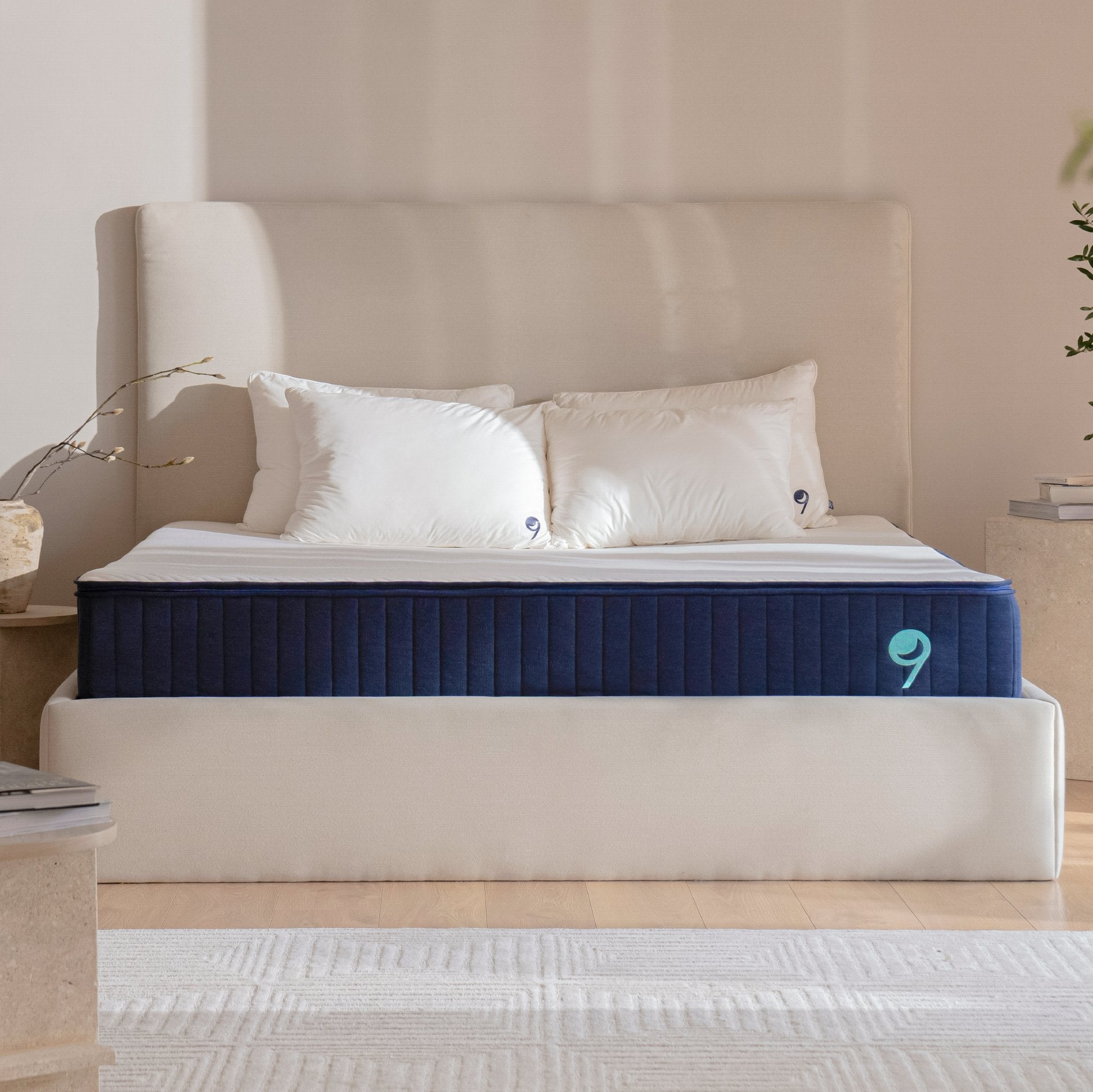
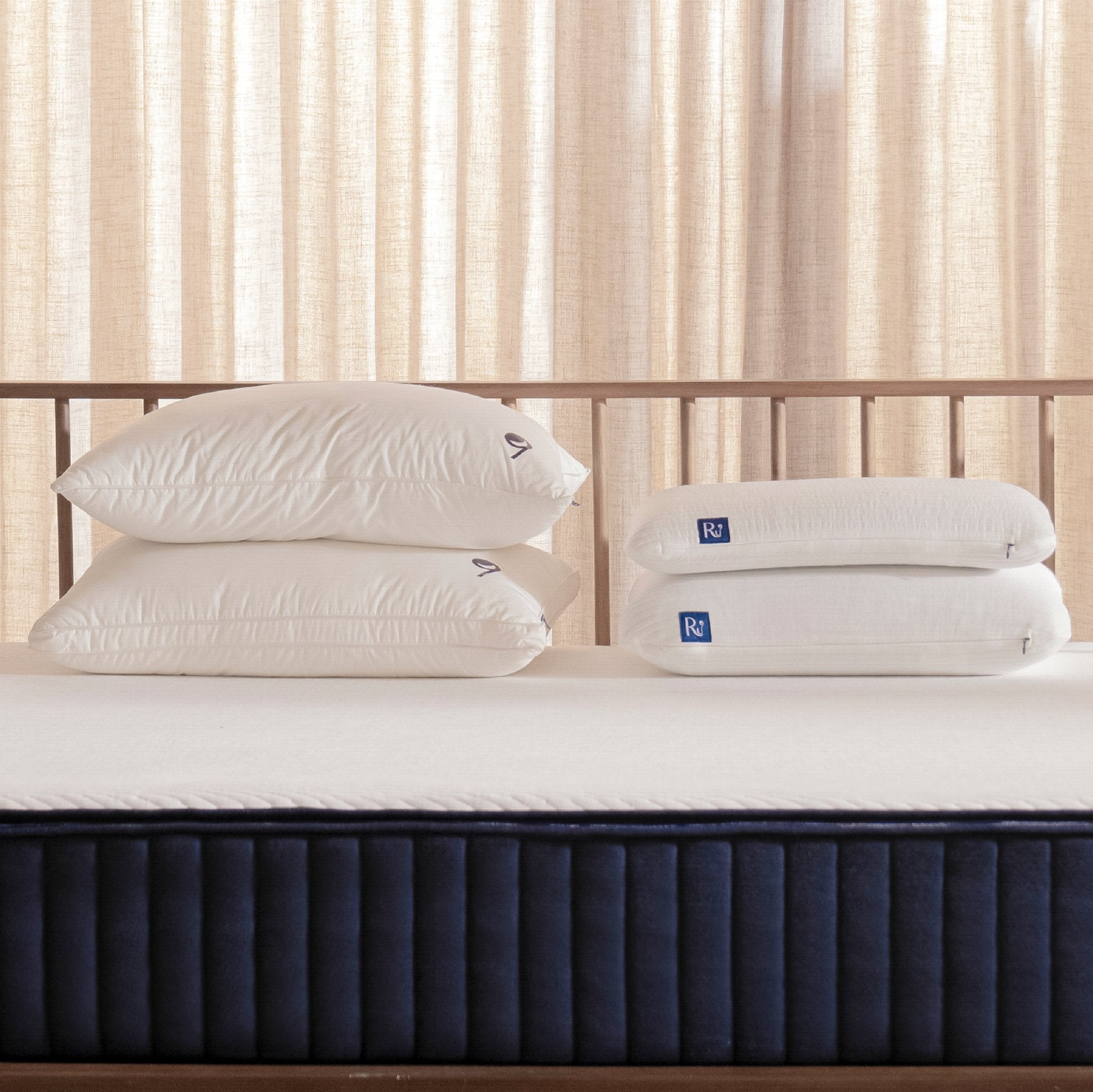
Comprehensive temperature management system: The IceGuard cooling mattress protector combined with Ru9 mattress lines forms an optimal thermoregulation ecosystem. The specialized cold fabric on IceGuard actively dissipates excess heat from the body upon contact, while collaborating with the mattress core layers (such as Graphene Memory Foam in the Original Pro line or open-cell foam) to promote air circulation. This combination eliminates heat retention, maintaining an ideal micro-environment temperature so the brain is not woken up mid-sleep, along with a waterproof TPU layer that absolutely protects the sleep environment from bacteria.
Motion isolation and pressure relief: Sleep disruption due to physical vibrations is thoroughly addressed thanks to Ru9's specialized material structure. Depending on the mattress line, we apply a 3-zone support design (to precisely support shoulders, back, hips) combined with Contour Foam that conforms to the spinal curves, or an independent pocket spring system (on the Hybrid line). Thanks to this design, body weight is evenly distributed and all motion is completely isolated at the point of contact. Micro-noise and motion transfer are eliminated, absolutely protecting the continuity of the deep sleep cycle even if a partner turns over.
We know you spend a third of your life in bed, so we cannot take the solutions we create lightly. The body's recovery is something that can be proven.
Felt. Measured. Every morning.
Discover in detail how the Ru9 Mattress Ecosystem and IceGuard Cooling Protector help you regain control of your sleep.
07/04/2026

How Many Hours of Sleep Do Adults Need? Decoding It from the Sleep Foundation
In the busy lives of young people striving to build their careers or new parents welcoming a new family member, sleep is often seen as a "variable" that can be easily cut short. We tend to stay up a little longer to finish work, telling ourselves we'll "catch up on sleep" on the weekend.
However, sleep doesn't operate like a bank account where you can borrow and repay. So, for the body to truly be nurtured and regain energy amidst daily pressures, how many hours of sleep does an adult need each night?
Key Takeaways
Standard Duration: According to the Sleep Foundation's report, adults (18-64 years old) need 7 - 9 hours of sleep per night.
Consequences of "Sleep Debt": Citing research by expert Eric Suni, chronic sleep deprivation (under 6 hours/night) disrupts the circadian rhythm, impairs cognition, and weakens the immune system.
Quality Over Quantity: Sleeping 8 hours but being interrupted by a hot, stuffy mattress or poor posture can leave you more tired than a deep, uninterrupted 6-hour sleep.
Recovery Solutions: Optimize your sleep space by stabilizing your circadian rhythm and using an ergonomic, heat-dissipating support surface.
Sleep Debt: An Adult's Costly Payment
Many believe that a long sleep from morning to afternoon on Sunday is enough to compensate for a week of only 4-5 hours of sleep per night. However, according to research by the Sleep Foundation, the human neurological recovery cycle does not work on an accumulative basis.
Continuous sleep deprivation will cause cumulative damage to the brain. Sleeping in on weekends can only temporarily alleviate muscle fatigue, but it cannot fully restore the natural circadian rhythm that has been disrupted. When the circadian rhythm is out of sync, the body enters a state of "jet lag" in its own home, making the start of a new week sluggish.
Answering the Question: How Much Sleep Is Enough?
To find the true amount that helps the body regenerate energy, we need to look at scientific data. Citing the in-depth report "How Much Sleep Do You Need?" by Eric Suni published on the Sleep Foundation website, the biological need for sleep is clearly defined for each developmental stage:
Adults (18 - 64 years old): The most ideal period is from 7 to 9 hours per night. This is the mandatory threshold for the brain to carry out detoxification and for muscles to relax.
Older Adults (65 and over): This need decreases slightly, ranging from 7 to 8 hours.
The report by expert Eric Suni also specifically emphasizes that if an adult regularly sleeps less than 6 hours, they will put themselves in a state of "severe sleep deprivation." This state not only reduces focus but also directly affects emotional control, making you easily irritable and exhausted by the smallest pressures.
Why Do We Still Feel Tired After "Enough Sleep"? – The Explanation from Sleep Science
Have you ever wondered why you've been in bed for a full 8 hours but still feel exhausted when you wake up? The 7-9 hour number is actually just a necessary condition. According to analysis by experts at the Sleep Foundation, for the body to be truly "recharged," the quality of sleep is the decisive factor.
Quality sleep must ensure continuity for the body to go through all cycles, especially Deep Sleep and REM Sleep. Research indicates two most common physical factors that disrupt these cycles:
Temperature disruption: When the mattress and bedding accumulate body heat without being able to dissipate it, your body temperature will rise. The inability to naturally lower body temperature causes constant discomfort, sweating, and pushing you out of the deep sleep phase.
"Micro-awakenings": A mattress that is too firm will create pressure on the shoulders and hips, while a mattress that is too soft will cause the spine to sag. This misalignment of posture forces the brain to continuously send signals to wake the body (even if you are not aware of it) to turn over and find another position, completely disrupting the recovery process.
Establishing a State of "Good Sleep Despite Pressure"
Understanding the scientific numbers is the first step, but optimizing limited rest time is a real challenge for adults. Based on sleep hygiene principles, Ru9 suggests two core steps:
Prioritize the consistency of your biological clock: Try to go to bed and wake up at a fixed time, even on weekends. This discipline helps the brain automatically release melatonin (the sleep hormone) rhythmically.
Create an ergonomically sound space: You cannot have a perfect sleep on a suboptimal support. Invest in a sleeping surface that can release multi-zone pressure and integrate cooling technology. When your muscles don't have to strain to maintain posture and your skin can "breathe," you will fall asleep faster and deeper.
A brilliant start to tomorrow always originates from a full night's sleep tonight. At Ru9, we believe that investing in sleep is the highest-return investment for your work performance and mental health.
💡 What does your body truly need to recover? Each individual has completely different sleeping habits, bone structures, and sleep issues. Don't leave your health to emotional choices.
Please take 2 minutes to complete the Sleep Quiz from Ru9. By analyzing your personal habits, we will help you find a tailor-made support solution, providing you with the most complete care.
𝐑𝐮𝟗 - 𝐑𝐮 𝐧𝐠𝐮̉ 𝐭𝐫𝐞̂𝐧 𝐜𝐡𝐢́𝐧 𝐭𝐚̂̀𝐧𝐠 𝐦𝐚̂𝐲----------------------------------------Contact Ru9 now for more detailed information!🌐 Website: https://ru9.vn/☎ Hotline: 1900 63 63 21 - 0867770969🏠 Showroom HCMC 1: B2 Sarimi Building, 72 Nguyen Co Thach, An Khanh Ward, HCMC🏠 Showroom HCMC 2: 283A Hai Ba Trung, Xuan Hoa Ward, HCMC🏠 Showroom Hanoi: 228 Cau Giay, Cau Giay Ward, Hanoi#Ru9 #TheSleepCompany
04/04/2026

Top 20 Indoor Plants That Don't Need Sunlight and Are Good for Feng Shui
Properly selecting and arranging indoor plants not only beautifies the space and purifies the air but also attracts positive feng shui energy, bringing wealth and luck. Join Ru9 to discover beautiful, easy-to-care-for indoor plants with good feng shui meanings to place on balconies, tables, room corners, etc., in this article!
1. What are the benefits of growing indoor plants?
Indoor green plants offer many practical benefits for health and living spaces.
Improve health
Air purification: Indoor ornamental plants act as natural purifiers, helping to cleanse the air by absorbing harmful substances like formaldehyde and benzene.
Increase air humidity: Plants release water through their leaves, increasing indoor air humidity, which is very beneficial on dry days and in air-conditioned rooms.
Reduce stress: The color green is good for the eyes, helping to relieve stress when concentrating for too long. Additionally, caring for and growing indoor plants can reduce stress, soothe the mind, and improve mood.
Improve sleep: Some indoor ornamental plants like Pothos, Peace Lily, Snake Plant, Spider Plant, etc., can produce oxygen at night, promoting deeper and better quality sleep.
Improve living space
Indoor plants make your living environment fresher, cooler, and more vibrant. Furthermore, if you know how to arrange ornamental plants, your home space will be enhanced and have a focal point.
Bring good feng shui
Ornamental plants have a significant impact on the feng shui of a house. If you choose the right plant for the homeowner's destiny and place it in auspicious positions, it can bring many feng shui benefits such as:
Attracting positive energy, helping to balance yin and yang in the home.
Bringing wealth, luck, health, peace, career advancement, etc., depending on the feng shui meaning of each plant.
2. Classification of indoor ornamental plants
Indoor plants that don't need light
Examples: Snake Plant, Pothos, Peace Lily, or Chinese Evergreen
General characteristics: These indoor plants that don't need much light thrive in low-light conditions, suitable for room corners or areas with little direct sunlight.
Advantages: Easy to care for, suitable for offices, living rooms, etc.
Disadvantages: Slow growth
Light-loving plants
Examples: Money Tree, Dracaena, Dwarf Banana, Areca Palm, Mini Rose,...
General characteristics: Require strong light for photosynthesis and good growth, typically placed in areas with ample natural light.
Advantages: Beautiful leaves and flowers, vibrant and fresh colors.
Disadvantages: Require more watering and careful maintenance; without sunlight, leaves may fall off or turn yellow.
Indoor green plants with air-purifying capabilities
Examples: Snake Plant, Pothos, Peace Lily, Ferns, Aloe Vera, Spider Plant,..
General characteristics: Filter dust and absorb harmful substances in the air, while also releasing oxygen.
Advantages: Purify the air, improve the respiratory system, skin, and mood.
Easy-to-care-for ornamental plants
Examples: Snake Plant, Pothos, Kalanchoe, Aloe Vera, Succulents,...
General characteristics: These are often indoor plants that don't require light, are drought-tolerant, and resist waterlogging well.
Advantages: Easy to grow, require less time and effort to care for, suitable for busy people.
Plants with good feng shui meaning
Examples: ZZ Plant, Dracaena, Aglaonema, Chinese Evergreen, Lady Palm,...
General characteristics: Possess strong positive energy, bright and full appearance.
Advantages: Bring prosperity, luck, peace, or career advancement to the homeowner.
See the latest premium Ru9 foam mattress price list now!
3. Top 20 indoor plants that don't need light and have good feng shui meanings
Easy-to-care-for indoor plants with good feng shui: Snake Plant, ZZ Plant, Kalanchoe, Dracaena, Fern, Pothos, Peace Lily, Pilea, Lady Palm, Dwarf Banana, Chinese Evergreen, Spider Plant, Ivy, Succulents, Cactus, Money Tree.
Air-purifying green plant: Snake Plant
Appearance: Snake Plant is loved for its robust appearance with unique upright, striped leaves.
Advantages: Effectively purifies the air, helping to remove many toxins from the home.
Care requirements: Easy to care for, resilient, drought-tolerant, and does not require very strong light, suitable for busy people or beginners in plant care.
Feng shui meaning: Snake Plant symbolizes strength and protection, helping to ward off negative energy and attract wealth.
Suitable placement: Living room or near the entrance.
Lucky indoor ornamental plant: ZZ Plant
Appearance: ZZ Plant stands out with its lush green leaves and succulent stems.
Advantages: Brings a sense of luxury and prosperity to the space.
Care requirements: This indoor ornamental plant thrives in light shade and only needs moderate moisture.
Feng shui meaning: ZZ Plant is considered a symbol of prosperity, bringing luck and wealth to the homeowner.
Suitable placement: ZZ Plant is very suitable for offices or living rooms to "welcome good fortune into the home."
Ornamental plant for beginners: Kalanchoe
Appearance: Kalanchoe has thick, succulent, lush green leaves. The plant has small flowers but they grow in large clusters, making them quite vibrant.
Advantages: Resilient in various environments.
Care requirements: The plant does not need much water and can tolerate direct sunlight, suitable for beginners.
Feng shui meaning: Kalanchoe represents resilience, strong vitality, and brings positive energy.
Suitable placement: Kalanchoe is a plant to grow indoors or in an office.
Dracaena Plant
Appearance: Dracaena or Lucky Bamboo is a large ornamental plant with stout stems and glossy green leaves.
Advantages: Large plant provides coolness and creates a good focal point.
Care requirements: The plant needs consistent moisture; avoid letting the soil get too dry or too wet.
Feng shui meaning: Dracaena is associated with wealth, prosperity, and attracting positive energy.
Suitable placement: Ideal for living rooms or workspaces to activate wealth.
Fern Plant
Appearance: Ferns primarily consist of leaves, with large, soft, and lush green fronds.
Advantages: This indoor ornamental plant helps filter dust and increase humidity, creating a cool atmosphere.
Care requirements: Ferns are among the plants that do not require direct sunlight and thrive in humid air.
Feng shui meaning: Ferns are considered symbols of protection and growth, bringing a sense of peace and balancing energy in the home.
Suitable placement: Living room
Pothos Plant
Appearance: Pothos has a soft form and diverse colors, with large leaves and a trailing or bushy habit.
Advantages: Easily adapts to various light conditions, can be grown in hanging baskets or allowed to trail on shelves, creating a refreshing green focal point for living spaces.
Care requirements: Not picky about the environment, easy to care for.
Feng shui meaning: Pothos symbolizes prosperity and sustainable development, attracting good luck and neutralizing negative energy.
Suitable placement: Living room, office.
Beautiful and pure indoor ornamental plant: Peace Lily
Appearance: Peace Lily stands out with its pristine white flowers against glossy green leaves.
Advantages: This indoor plant not only beautifies the space but also has excellent air-purifying capabilities.
Care requirements: Requires nutrient-rich soil and good moisture retention.
Feng shui meaning: Symbolizes purity and balance, helping to bring peace and harmony to the family.
Suitable placement: Indoor spaces, living rooms, or offices.
Pilea Plant
Appearance: Small, perfectly round, lush green leaves.
Advantages: Elegant, minimalist, and easy to pair with any space.
Care requirements: Easy to care for, not picky about the environment.
Feng shui meaning: The round shape of the leaves symbolizes fullness and wealth.
Suitable placement: This indoor plant is suitable as a base for larger potted plants or placed on a desk, helping to balance energy in the space.
Large ornamental plant: Lady Palm
Appearance: Lady Palm is a large ornamental plant that impresses with its fan-shaped leaves and elegant stem.
Advantages: Suitable for luxurious, modern, and minimalist interior spaces.
Care requirements: This indoor green plant tolerates shade well and thrives with moderate watering, avoiding waterlogging.
Feng shui meaning: Lady Palm signifies protection and peace, helping homeowners feel relaxed and attracting good fortune.
Suitable placement: Indoor spaces.
Dwarf Banana Plant
Appearance: Dwarf Banana is a large indoor ornamental plant with broad leaves and a lush green color.
Advantages: Brings a fresh tropical atmosphere.
Care requirements: Does not require direct sunlight, needs consistent watering.
Feng shui meaning: Dwarf Banana is a symbol of abundance and prosperity, helping the family always be prosperous and well-off.
Suitable placement: Living room.
Chinese Evergreen Plant
Appearance: Large leaves, diverse colors, and striking patterns.
Advantages: Beautifies the space and purifies the air.
Care requirements: Easy to grow, prefers shade. Contains mild toxins, so keep away from small children and pets.
Feng shui meaning: Endurance and continuous growth, bringing longevity and good luck.
Suitable placement: Balcony, window, living room, front door.
Spider Plant
Appearance: Spider Plant consists of a cluster of small, slender leaves with an interesting color transition between green and yellow.
Advantages: Fast-growing and produces many plantlets, excellent at air purification.
Care requirements: Prefers shade, easy to care for.
Feng shui meaning: Spider Plant symbolizes continuous growth and prosperity, helping to attract wealth for the homeowner.
Suitable placement: High positions such as hanging shelves or stands in the living room, bedroom (because it can release oxygen at night).
Ivy Plant
Appearance: Long vines with small, rounded leaves.
Advantages: Ivy is an indoor plant with strong vitality and good adaptability, effectively purifying the air.
Care requirements: Needs a hanging planter or placed in a high spot like a window, prefers shade.
Feng shui meaning: Ivy represents resilience and good luck.
Suitable placement: Indoors and offices.
Beautiful and strong indoor plants: Succulents, Cactus
Appearance: Succulents and cacti are two types of succulent plants, with leaves often arranged in a circular shape like a lotus flower.
Advantages: Excellent drought tolerance, vibrant flowers, beautiful leaf shapes.
Care requirements: They are among the few indoor plants that do not require much watering, only needing to be kept in a well-lit area to maintain their vibrant colors.
Feng shui meaning: Strength, resilience, and the ability to overcome difficulties, while also attracting good fortune for the homeowner.
Suitable placement: Balcony, desk.
Money Tree Plant
Appearance: Money Tree has a compact size, glossy green leaves with golden edges.
Care requirements: Money Tree is a plant that does not need direct sunlight, making it very easy to care for and suitable for growing indoors.
Feng shui meaning: Money Tree is considered a symbol of wealth and prosperity, helping to attract positive energy and good fortune for the homeowner.
Suitable placement: Often placed on a desk or hung indoors.
Cedar Plant
Appearance: Light green needles, distinct aromatic scent, and an antique, Western aesthetic.
Care requirements: Cedar prefers light and is suitable for cool climates.
Feng shui meaning: Good luck, warding off evil spirits, resilience, and longevity.
Suitable placement: Balcony, porch.
Schefflera Plant
Appearance: Unique palmate leaves.
Advantages: Good air purification.
Care requirements: Easy to care for, adaptable to various light conditions, thrives best in indirect light.
Feng shui meaning: Good luck, wealth, and health.
Suitable placement: Homes and offices.
Rubber Plant
Appearance: Large, thick, round, and glossy leaves, exuding a luxurious and robust beauty.
Care requirements: Does not require much watering, should be placed in an area with indirect light.
Feng shui meaning: Good luck, wealth, and happiness.
Suitable placement: Window, desk.
Most famous indoor plant: Fiddle Leaf Fig
Appearance: Round, large leaves, vibrant dark green.
Advantages: The Fiddle Leaf Fig is very popular in the ornamental plant world for its extremely Western, luxurious, and modern beauty.
Care requirements: Water 1-2 times/week, suitable for room temperature, prefers bright light but can live in shade or artificial light.
Feng shui meaning: Sustainable development, perseverance, and wealth.
Suitable placement: Living room, office.
4. Criteria for choosing indoor ornamental plants
To choose the right indoor plant, you need to understand the characteristics and care needs of each plant. This not only helps the green plants grow healthy but also creates a harmonious and pleasant living space.
Here are some criteria for choosing indoor ornamental plants that you can refer to:
Choose plants based on space characteristics
To maximize the beauty and function of indoor ornamental plants, you should choose plants based on the characteristics of the space:
Size: Choose green plants whose size is proportionate to the room's area. Avoid choosing plants that are too large, making the room cramped, or too small, making them overshadowed in the overall space.
Humidity: Each indoor plant has different humidity requirements. Some plants thrive in humid environments, while others prefer dry air, so consider the environmental conditions before choosing a plant.
Light: Choose a light-loving or shade-loving plant that suits the space you plan to place it in.
Color: Choosing indoor plants with leaf or flower colors that harmonize with your interior color scheme will help create balance and harmony, highlighting the beauty of both the plant and its surroundings.
Choosing indoor plants according to feng shui elements
Plants that match the owner's element will bring good luck and convenience in life and work. Below are indoor plants suitable for each element.
Metal element: Choose indoor plants with white, gray, or light yellow leaves such as money tree (Pachira aquatica), lucky bamboo (Dracaena sanderiana), or ZZ plant (Zamioculcas zamiifolia). Plants with round, sturdy shapes help increase good fortune for those with the Metal element.
Wood element: Beautiful indoor plants suitable for people with the Wood element are often those with dark green or emerald green leaves such as pothos (Epipremnum aureum), ferns, and peace lily (Spathiphyllum). Indoor ornamental plants with long, soft stems or leaves also help activate growth energy and fertility.
Water element: Owners with the Water element should choose indoor plants with blue, navy blue, or white colors, such as aquatic plants, peace lily, or Japanese palm (Rhapis excelsa). Plants with soft, flowing shapes will suit this element.
Fire element: Choose indoor plants with red, orange, pink, or purple colors such as Dumb Cane (Dieffenbachia), poinsettia (Euphorbia pulcherrima), or plants with vibrant colored leaves to enhance energy, enthusiasm, and good luck.
Earth element: Indoor plants with yellow, earthy brown colors, such as snake plant (Sansevieria trifasciata), succulents (Sedum), or money tree (Pachira aquatica) are good choices for people with the Earth element. Plants with sturdy, strong stems help increase stability and peace.
Choosing plants based on feng shui meaning
Different types of ornamental plants bring different feng shui meanings. Depending on the energy and message you want to receive, choose the appropriate plant.
Attracting wealth: Choose money tree, Red Aglaonema, money plant, Areca palm,...
Attracting health: Snake plant, pothos, peace lily, spider plant,...
Attracting peace: Succulents, jade plant
Attracting growth and advancement: Japanese palm, Dumb Cane, spider plant,...
Choosing plants for each corner of the house
Each area in the house will be suitable for different types of ornamental plants with specific care characteristics and feng shui meanings. Specifically:
Living room: Choose tall, large plants with elegant shapes such as Fiddle-leaf fig (Ficus lyrata), Japanese palm, or Imperial Pothos (Epipremnum aureum 'N'Joy').
Bedroom: Only choose green plants that release oxygen at night, such as peace lily, snake plant, or aloe vera, for better sleep.
Bathroom and kitchen: These are suitable places for shade-loving and humidity-loving plants such as pothos and ferns. Placing green plants in these areas will help deodorize and create a relaxing, clean feeling.
5. Notes when caring for indoor flowering plants
To care for indoor plants that don't need sunlight or indoor plants in general, you should refer to the following notes:
Light: Indoor plants that don't need sun and light-loving plants have very different light requirements, so they should be placed in appropriate locations.
Water: Remember the principle "better dry than waterlogged". Most indoor plants die from overwatering. Only water when the top 1 - 2cm of soil is dry.
Soil: When growing plants indoors, you should buy pre-mixed soil at a garden store because the soil will be looser and drain better.
Nutrition: If growing plants in pots, you should supplement with slow-release fertilizer or liquid fertilizer every 2 - 3 months. Note that you should only fertilize in spring and summer as this is when plants grow most vigorously.
Pests and diseases: Indoor plants are not sprayed with pesticides, so they are quite susceptible to disease. Regularly check the underside of the leaves; if there are pests or diseases, use diluted dish soap to wipe them clean.
Conclusion
Indoor plants are not only good for health and well-being but also beautify living spaces. Please consider carefully when choosing ornamental plants for your home. We hope this article has helped you find suitable options for your home.
20/03/2026

What is a "bạch nguyệt quang"? Exploring its origins and meaning in love
If you frequently browse TikTok, Facebook, or read romance novels, you've probably come across the term 'Bạch Nguyệt Quang' many times. This term appears frequently on social media, associated with romantic youthful love stories. So, what is Bạch Nguyệt Quang, where does it come from, and what does it mean? Let Ru9 help you understand this special Sino-Vietnamese term!
1. What is Bạch Nguyệt Quang?
Bạch Nguyệt Quang (白月光) in Chinese means "bright moon" and is a familiar term for those who enjoy romance novels and Chinese films. In English, Bạch Nguyệt Quang is often translated as “White Moon Light”.
In love, Bạch Nguyệt Quang is used to refer to a first love or someone who deeply moved us but with whom we ultimately couldn't be. It is often a pure, beautiful, but regrettable love from our youth.
Additionally, this term is also used to describe actresses with pure, gentle beauty like moonlight, such as Zhang Ruonan, Chen Duling, or Shen Yue—names that consistently receive public affection.
2. What is the meaning of Bạch Nguyệt Quang?
In Chinese, “Bạch” means white, while “Nguyệt Quang” refers to moonlight. Combined, “Bạch Nguyệt Quang” is understood as bright, perfect, but distant moonlight that can only be admired but rarely touched. From this original meaning, people gradually associated it with the image of a beautiful but unfulfilled love in life.
In romance literature, Bạch Nguyệt Quang often refers to a first love—a youthful memory full of emotion, deeply etched in the mind but without a happy ending. Therefore, for many, Bạch Nguyệt Quang symbolizes a love that is both sweet and regretful, existing forever in the heart like a bright moon that cannot be reached. This is also why this concept is frequently mentioned by young people on social media and in Chinese literary works and films.
3. What is the origin of Bạch Nguyệt Quang?
The term Bạch Nguyệt Quang (白月光) went viral on Chinese and Vietnamese social media in 2020 thanks to the song of the same name by singer Đại Từ. However, this term first appeared in Eileen Chang's novel “Red Rose, White Rose.”
The female character representing the white rose is described with pure and elegant beauty, captivating the male protagonist, forever etched in his heart. However, this love only ended in regret because they could not be together. After the girl's death, her image remained in the young man's mind like a distant bright moon—this is the premise for the concept of Bạch Nguyệt Quang: a beautiful, pure love that cannot be attained.
4. The difference between Bạch Nguyệt Quang and Nốt Chu Sa
What is Nốt Chu Sa and how does it differ from Bạch Nguyệt Quang? Both terms metaphorically refer to the image of a girl in a man's heart, but with two completely different connotations.
In the original work, Eileen Chang used two types of flowers to metaphorically represent two kinds of women, also symbolizing Bạch Nguyệt Quang and Nốt Chu Sa. The white rose is a symbol of a pure, dreamy, fragile, and emotional girl. Conversely, the red rose represents a strong, pragmatic woman associated with marital responsibilities.
If Bạch Nguyệt Quang symbolizes an ideal love and unforgettable youthful memories, then Nốt Chu Sa is a real-life partner, bringing companionship but also responsibilities and pressures. Nốt Chu Sa is like a vermilion mole on the skin, permanent and hard to fade.
The message Eileen Chang wanted to convey is: in every man's heart, there exist two figures. Bạch Nguyệt Quang is a distant, perfect love in memory, while Nốt Chu Sa is an everyday, long-lasting love. Everyone hopes the two can merge for complete happiness, but life is not easy, and what we cannot possess often becomes what we cherish most.
5. The influence of Bạch Nguyệt Quang in modern society
Internet slang
In online life, “Bạch Nguyệt Quang” has become a familiar keyword to express emotions. Instead of saying “dream person” or “unforgettable memory,” young people choose this term as a concise and evocative way to express themselves, creating strong empathy on social media.
Reflecting generational psychology
For Gen Z and Millennials, “Bạch Nguyệt Quang” represents what is beautiful, ideal, but hard to achieve. It reflects the desire for perfection in love, work, or life, and also shows a romantic yet aspiring mindset.
Influence on lifestyle
This concept is not limited to words but also extends to aesthetics. Many young people draw inspiration from the image of the “bright moon” to choose minimalist, gentle styles or create elegant living spaces. As a result, Bạch Nguyệt Quang has become a symbol associated with purity and innocence.
Modern cultural value
The widespread use of this term demonstrates the strong influence of internet culture. From a literary image, “Bạch Nguyệt Quang” has become part of everyday language, enriching the vocabulary for expressing emotions and creating a distinct mark in youth culture.
6. How to deal with Bạch Nguyệt Quang
“Bạch Nguyệt Quang” brings romance and unforgettable memories, but if you let it dominate, you can easily lose balance in your current love life. When too focused on the past, your partner may feel neglected, leading to distance in the relationship.
Learn to accept the past: Bạch Nguyệt Quang is a beautiful part of memories, but view it as a valuable experience rather than letting it become an obsession that prevents happiness.
Cherish the person by your side: The person accompanying you is your present and future. Give them attention, affection, and build trust to maintain a lasting love.
Become your own Bạch Nguyệt Quang: Don't just dream; you can improve yourself, live positively, and shine. Then, you can become a “bright moon” in the eyes of others.
Conclusion
Through this article, you now have a better understanding of what Nốt Chu Sa and Bạch Nguyệt Quang are and the message hidden behind these romantic images. In life, everyone may have an unforgettable 'bright moon,' but what's most important is to appreciate and cherish the happiness that is currently by your side.
08/03/2026

Custom mattress to order HCMC - Mattress cutting price list
If your family has a special space and needs a mattress product with dimensions that fit that design, Ru9 will provide you with a custom-sized mattress solution. This article will introduce the quality, price, and custom cutting process for mattresses at Ru9.
1. Custom-sized mattresses at Ru9
Custom-sized mattress service
At Ru9 stores, customers can purchase available Foam mattresses in standard sizes from 1m x 2m to 2m x 2.2m. However, if you need mattresses with unusual shapes or sizes, please contact Ru9 to experience our custom cutting and custom-sized mattress service.
Information on custom-sized mattresses at Ru9
Mattress quality: Ru9 commits to a 100% refund if the product does not satisfy customer needs. Learn more about custom-sized mattress models at Ru9:
Original Mattress
Nest Mattress
Foam Topper Mattress
Hybrid Spring Mattress
Price: Ranges from 2 million - 17 million VND.
Payment: Customers will need to deposit 30% to 50% of the product value in advance. Contact us for the most accurate quote.
Completion time: 10 - 14 days for individual orders. Business customers please contact us for further consultation.
Delivery: Ru9 offers free nationwide delivery within 1 - 3 days for orders from 1,500,000 VND. For express delivery, please contact us.
Warranty: Ru9 provides a warranty for mattress products for up to 10 years.
To order: Please contact us for free consultation via the following channels:
Chat via Website
Contact Hotline: 0964777910 (HCMC), 0964777940 (Hanoi)
In-store at Showroom: 283A Hai Bà Trưng, Ward 8, District 3, Ho Chi Minh City or 71 Tràng Thi, Hàng Bông, Hoàn Kiếm, Hanoi
Chat via Facebook Ru9
Information needed when ordering specially shaped mattresses:
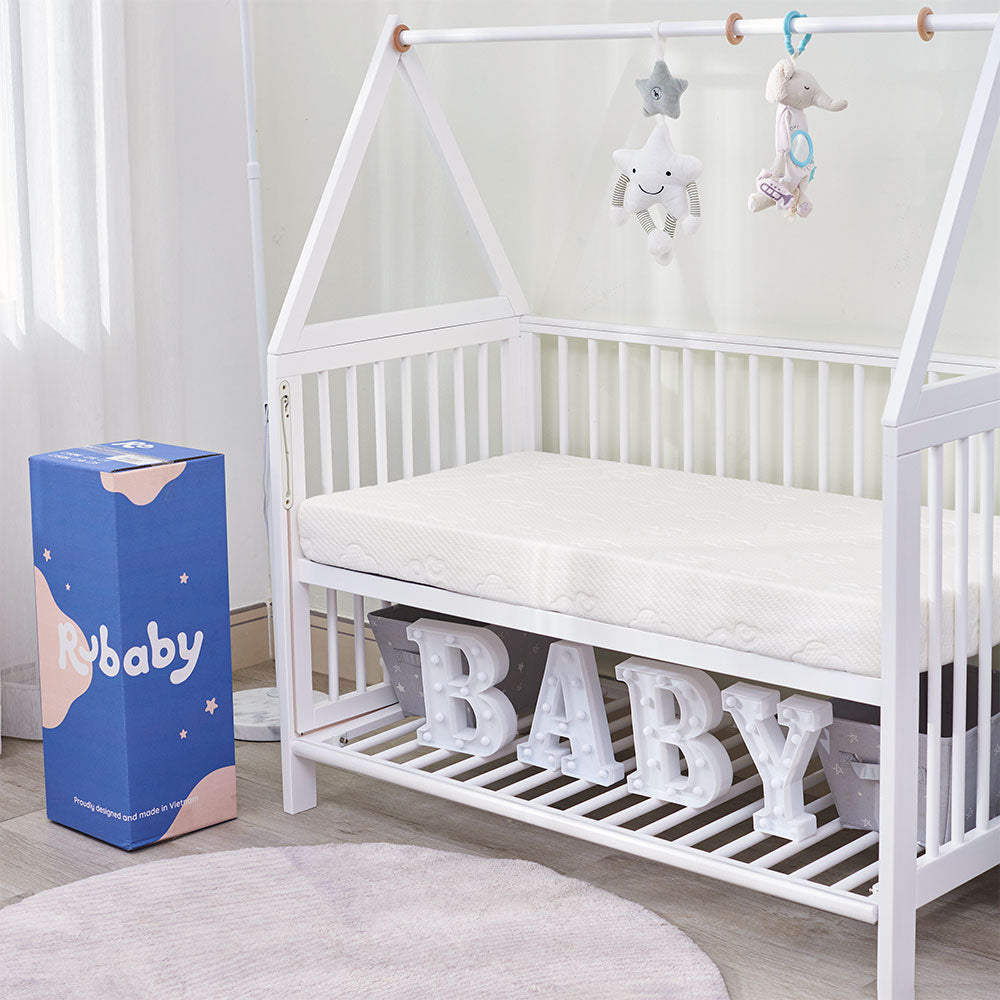
Ru9 accepts custom cutting of mattresses, offering 1, 2, 3, 4-fold mattresses, floor mattresses, bunk bed mattresses, crib mattresses, and sofa bed mattresses upon customer request.
For round mattresses, please provide the diameter (considered as length and width).
For trapezoidal mattresses, Ru9 needs information on the dimensions of the larger base (considered as width), smaller base, and height (considered as length).
For square mattresses, customers need to provide the side length.
For other shapes such as heart, shell, butterfly, etc., please contact us separately for further consultation.
You may also be interested in:
Is a 1m4 mattress a single or double mattress?
Which brand of 1.6m x 2m mattress should you buy?
Can a 1.8m x 2m mattress sleep 3 people?
Which spring mattress is the best currently? Can custom-sized spring mattresses be ordered?
Which latex mattress is good for health? Can custom latex mattresses be ordered?
Can a 2-fold mattress be custom-made and what is the price?
Which type of bed mattress is good? Review of the 5 most worthy products!
What are the pros and cons of a mattress topper? Who should buy a topper?
2. Custom-made mattress price list at Ru9
Price list for custom-sized, on-demand mattresses
Custom mattress price = Price of the next larger standard mattress size
For example, ordering a Nest mattress size 1.4m x 1.9m will be charged the same as a Nest mattress size 1.6m x 2m. Ru9 waives all custom-made fees. For mattresses with special shapes, please contact us for a detailed quote.
Price list of standard mattress sizes at Ru9
See more:
Top best-selling 2m x 2.2m compressed cotton mattresses
Is a cheap 1.2m x 2m mattress good quality?
What sizes are available for single bed mattresses?
Can a double mattress be custom-cut into a heart shape?
Can thin mattresses be used in cold weather?
Where to buy cheap thin floor mattresses?
How high should a bed be to buy a 20cm thick mattress
What is the size of a 1.2m mattress for different users?
01/03/2026


