










In the busy lives of young people striving to build their careers or new parents welcoming a new family member, sleep is often seen as a "variable" that can be easily cut short. We tend to stay up a little longer to finish work, telling ourselves we'll "catch up on sleep" on the weekend.
However, sleep doesn't operate like a bank account where you can borrow and repay. So, for the body to truly be nurtured and regain energy amidst daily pressures, how many hours of sleep does an adult need each night?
Key Takeaways
-
Standard Duration: According to the Sleep Foundation's report, adults (18-64 years old) need 7 - 9 hours of sleep per night.
-
Consequences of "Sleep Debt": Citing research by expert Eric Suni, chronic sleep deprivation (under 6 hours/night) disrupts the circadian rhythm, impairs cognition, and weakens the immune system.
-
Quality Over Quantity: Sleeping 8 hours but being interrupted by a hot, stuffy mattress or poor posture can leave you more tired than a deep, uninterrupted 6-hour sleep.
-
Recovery Solutions: Optimize your sleep space by stabilizing your circadian rhythm and using an ergonomic, heat-dissipating support surface.
Sleep Debt: An Adult's Costly Payment
Many believe that a long sleep from morning to afternoon on Sunday is enough to compensate for a week of only 4-5 hours of sleep per night. However, according to research by the Sleep Foundation, the human neurological recovery cycle does not work on an accumulative basis.
Continuous sleep deprivation will cause cumulative damage to the brain. Sleeping in on weekends can only temporarily alleviate muscle fatigue, but it cannot fully restore the natural circadian rhythm that has been disrupted. When the circadian rhythm is out of sync, the body enters a state of "jet lag" in its own home, making the start of a new week sluggish.
Answering the Question: How Much Sleep Is Enough?
To find the true amount that helps the body regenerate energy, we need to look at scientific data. Citing the in-depth report "How Much Sleep Do You Need?" by Eric Suni published on the Sleep Foundation website, the biological need for sleep is clearly defined for each developmental stage:
-
Adults (18 - 64 years old): The most ideal period is from 7 to 9 hours per night. This is the mandatory threshold for the brain to carry out detoxification and for muscles to relax.
-
Older Adults (65 and over): This need decreases slightly, ranging from 7 to 8 hours.

The report by expert Eric Suni also specifically emphasizes that if an adult regularly sleeps less than 6 hours, they will put themselves in a state of "severe sleep deprivation." This state not only reduces focus but also directly affects emotional control, making you easily irritable and exhausted by the smallest pressures.
Why Do We Still Feel Tired After "Enough Sleep"? – The Explanation from Sleep Science
Have you ever wondered why you've been in bed for a full 8 hours but still feel exhausted when you wake up? The 7-9 hour number is actually just a necessary condition. According to analysis by experts at the Sleep Foundation, for the body to be truly "recharged," the quality of sleep is the decisive factor.
Quality sleep must ensure continuity for the body to go through all cycles, especially Deep Sleep and REM Sleep. Research indicates two most common physical factors that disrupt these cycles:
-
Temperature disruption: When the mattress and bedding accumulate body heat without being able to dissipate it, your body temperature will rise. The inability to naturally lower body temperature causes constant discomfort, sweating, and pushing you out of the deep sleep phase.
-
"Micro-awakenings": A mattress that is too firm will create pressure on the shoulders and hips, while a mattress that is too soft will cause the spine to sag. This misalignment of posture forces the brain to continuously send signals to wake the body (even if you are not aware of it) to turn over and find another position, completely disrupting the recovery process.
Establishing a State of "Good Sleep Despite Pressure"
Understanding the scientific numbers is the first step, but optimizing limited rest time is a real challenge for adults. Based on sleep hygiene principles, Ru9 suggests two core steps:
-
Prioritize the consistency of your biological clock: Try to go to bed and wake up at a fixed time, even on weekends. This discipline helps the brain automatically release melatonin (the sleep hormone) rhythmically.
-
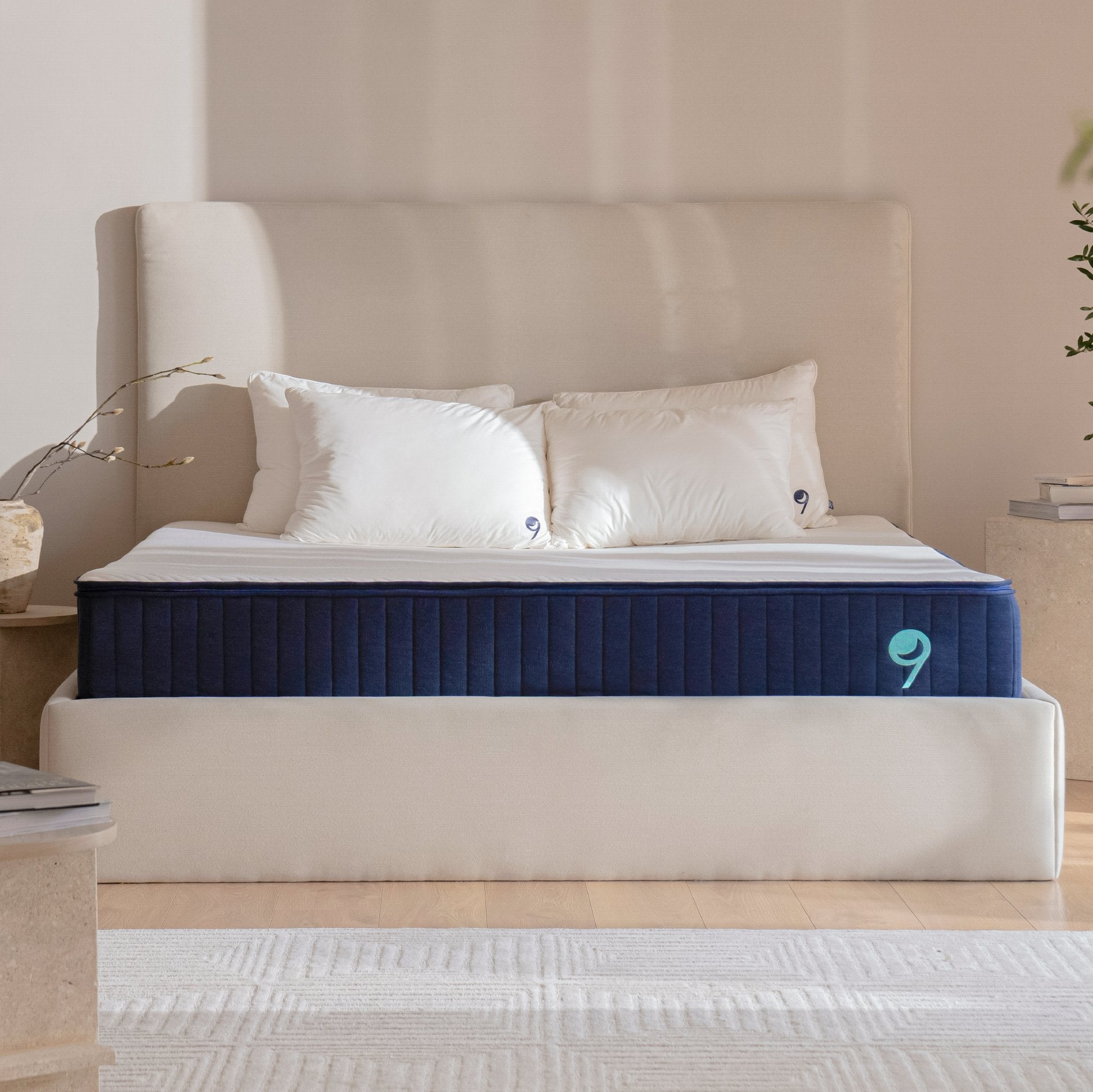
Create an ergonomically sound space: You cannot have a perfect sleep on a suboptimal support. Invest in a sleeping surface that can release multi-zone pressure and integrate cooling technology. When your muscles don't have to strain to maintain posture and your skin can "breathe," you will fall asleep faster and deeper.
A brilliant start to tomorrow always originates from a full night's sleep tonight. At Ru9, we believe that investing in sleep is the highest-return investment for your work performance and mental health.
💡 What does your body truly need to recover? Each individual has completely different sleeping habits, bone structures, and sleep issues. Don't leave your health to emotional choices.
Please take 2 minutes to complete the Sleep Quiz from Ru9. By analyzing your personal habits, we will help you find a tailor-made support solution, providing you with the most complete care.
𝐑𝐮𝟗 - 𝐑𝐮 𝐧𝐠𝐮̉ 𝐭𝐫𝐞̂𝐧 𝐜𝐡𝐢́𝐧 𝐭𝐚̂̀𝐧𝐠 𝐦𝐚̂𝐲
----------------------------------------
Contact Ru9 now for more detailed information!
🌐 Website: https://ru9.vn/
☎ Hotline: 1900 63 63 21 - 0867770969
🏠 Showroom HCMC 1: B2 Sarimi Building, 72 Nguyen Co Thach, An Khanh Ward, HCMC
🏠 Showroom HCMC 2: 283A Hai Ba Trung, Xuan Hoa Ward, HCMC
🏠 Showroom Hanoi: 228 Cau Giay, Cau Giay Ward, Hanoi
#Ru9 #TheSleepCompany


