









Choosing a bedding set that can meet all criteria is not easy, especially when each fabric has unique characteristics. separate point. You must have heard of the concept of cotton sateen and cotton percale when learning about materials suitable for bed sheets. So how are these two cotton fabrics different? What criteria should you base on to get the most suitable choice? Let Ru9 help you answer these questions.
- What is cotton sateen and cotton percale?
1.1. Cotton percale
Cotton percale is a fabric woven entirely from organic cotton fibers. This fabric is created using the overlap weaving method - one weft and one warp, which helps the fibers to knit together tightly. To be considered cotton percale fabric, the weave density of the fabric needs to be at least 180 yarns or more.
Overlapping weaving method has helped the cotton percale fabric possess a strong surface and light texture. High-end hotels also love this fabric thanks to its ventilation but no less thick - suitable for all weather conditions, especially places with hot and humid climates.
1.2. Cotton satin
Cotton sateen is a woven fabric with little association between the weft and warp threads, using extremely fine fibers to create a soft surface, smooth. Compared to cotton percale, cotton sateen has a higher weave density, so it feels firmer and warmer. You can absolutely use cotton satin bed sheets all year round, but this fabric is especially suitable for winter weather because they retain heat well.
- Differences between cotton sateen and cotton percale
The first difference between these two cotton materials is the density of the weave. Cotton sateen has a higher weave density, about 300-600 yarns with the highest grade, while cotton percale only falls in the range of 200-300 fibers. This also leads to a misunderstanding that cotton sateen is "premium" than cotton percale. However, a higher weave density (> 700) also means that the fabric will lose heat less. So, please research carefully before deciding to buy.
Because it is produced by two different weaving methods, the temperature, or the ventilation of percale and sateen also have differences. Thanks to the knitting method, percale cotton fabric has good breathability, bringing ventilation and coolness to the user. Therefore, percale is the ideal choice for summer sleep.
In contrast, cotton sateen's weaving method makes this fabric good at retaining heat, keeping you warm while you sleep. This makes cotton sateen the ideal fabric for you in winter, or for those who easily feel cold while sleeping.
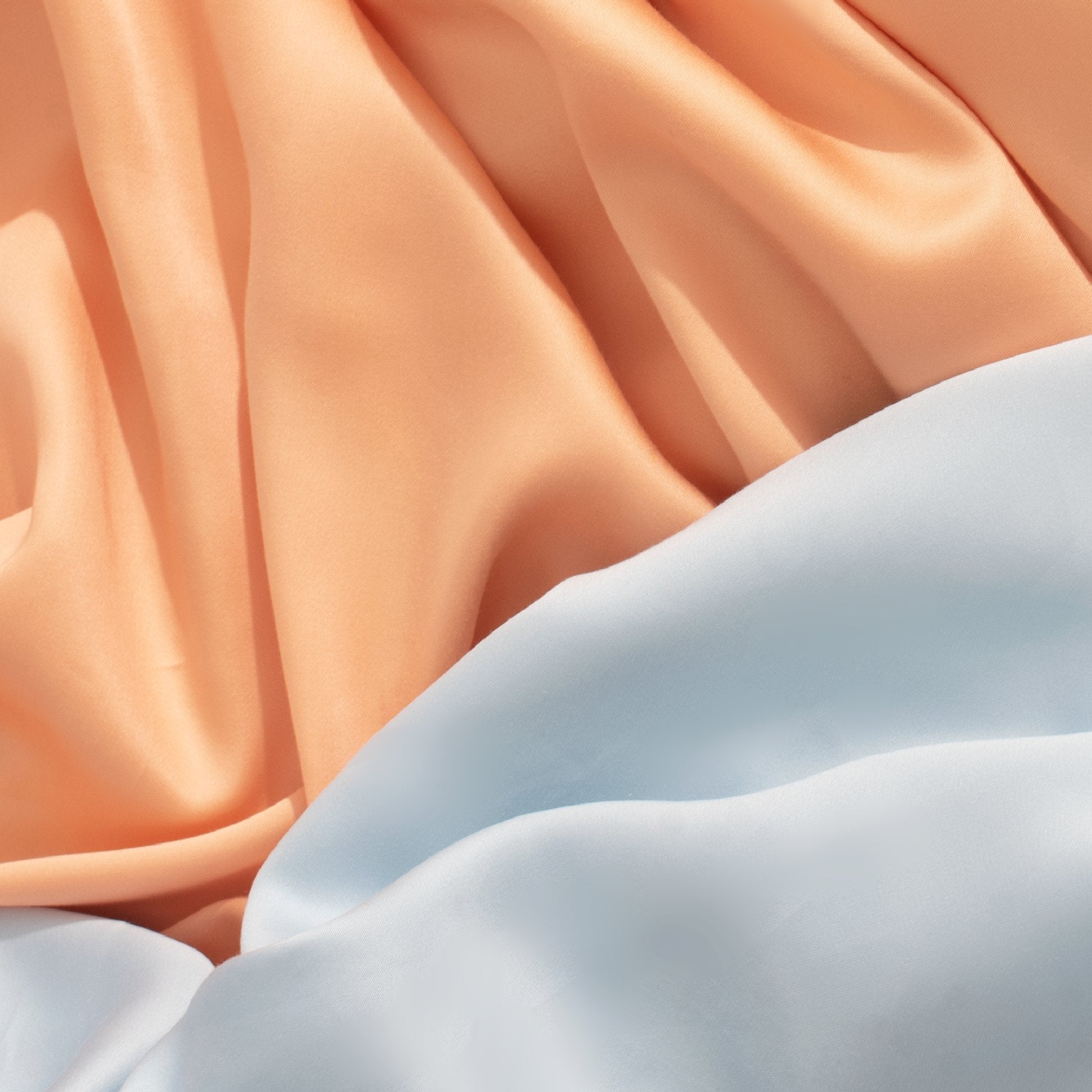
The final difference between sateen and percale is the surface of the fabric. When you come in contact with cotton percale, you will feel a slight roughness, almost like cotton. In contrast, cotton sateen gives you a soft, smooth feel and has a slight sheen, almost like silk or satin.
- Sateen and Percale - Which is the cotton fabric for you?
3.1. You should choose cotton percale if:
It is a fact that, every time you think of the feeling of lying on the bed sheets of high-class hotels, you are remembering the feeling of cotton percale. If you prioritize coolness and breathability when sleeping, percale will be the perfect choice. Thanks to its good heat dissipation, the cotton percale fabric will keep you comfortable for up to 8 hours.
Not only that, percale is also an ideal fabric for summer and hot and humid climates. Besides ventilation, cotton percale is less prone to dust and odors. Therefore, it is much easier to clean and maintain bed sheets, especially in the wet rainy season.
Because the surface of cotton percale is similar to that of linen, this cotton fabric also offers a simple feel with elegant tones. So, if you want your bedroom to have a casual, elegant style, then choose percale cotton bed sheets.
3.2. You should choose cotton sateen if:
If you like the high-class feel of a 5-star hotel, cotton sateen will be the perfect choice for you. Cotton sateen has a smooth and soft surface that resembles silk or satin. This fabric will be extremely suitable for those who prioritize softness and smoothness when in contact with the skin.
The softness also makes cotton sateen a "savior" for girls with dry skin or rough, brittle hair. The smooth surface will help reduce friction for your hair and skin as you "roll over" in your sleep, keeping your hair free of frizz or static the next morning.
In the end, the choice is up to you, on your preferences. Both fabrics are woven from 100% organic cotton, so they are absolutely safe for the skin and the environment. Both cotton sateen and cotton percale make bedding sets pillow mattress perfect - sleep-friendly, does not adversely affect your health. You can even change the material according to the season to have the most complete sleep.
Hope this article has given you an overview of the difference between cotton sateen and cotton percale. If you are looking for a good bed sheet to improve sleep quality, visit and explore the products at Ru9!


