









On the market, each mattress line is produced with different thicknesses and sizes to meet the maximum needs of customers. different size specifications and functions. So, what are the common mattress thicknesses today? Let's explore with Ru9 through the article below.
1. Common mattress thicknesses today
To serve even the smallest needs of customers, many mattress lines from affordable to high-end have been developed. Among them, each type of mattress has different thickness specifications. Below are the common mattress thicknesses:
Natural latex mattress
The outstanding characteristic of natural latex mattresses is their high durability, not sagging or losing elasticity even after long-term use. Therefore, this is a premium product highly rated by many customers for its quality.

The common thickness of latex mattresses is about 10 - 15cm.
Latex mattresses are highly safe and gentle, and provide excellent body support. This product line is often designed with thicknesses of 5cm, 10cm, 15cm, 17cm, and 20cm. Among these, the most common mattress thickness is 10cm.
>> See more:
- How thick should you buy a mattress: Advice suitable for your needs
- Which 15cm compressed fiber mattress is truly good and durable?
- Top 20cm mattress models ideal for every home
- Which 25cm firm mattress model is worth buying? What are the advantages of a 25cm thick mattress?
Spring mattress
This mattress line, with its internal spring structure, ensures high bounce and elasticity, can be used well for about 5-7 years, and has a reasonable price, making it a trusted choice for the majority of families.
Spring mattresses are often made with various thicknesses depending on the user's needs, including: 15cm, 20cm, 23cm, 25cm, 28cm, 30cm, 40cm, and can even be thicker. However, the most common thickness is around 20-25cm.
In fact, this is a mattress line with a noticeable thickness compared to other mattress lines, because spring mattresses thinner than 15cm do not have a very sturdy structure, and when used, they often experience a loss of elasticity and quick sagging.
See more: Which 25cm firm mattress model is worth buying? What are the advantages of a 25cm thick mattress?
Compressed fiber mattress
Compressed fiber mattresses are notable for their softness, lightness, and easy foldability, thus providing convenience in folding, moving, and cleaning. This mattress line scores highly with many discerning users.
The standard thickness of this mattress line includes 5cm, 9cm, 15cm, 18cm, 20cm. Among them, the 9cm type is more popular and suitable for many families.
Foam mattress
Foam mattresses have good elasticity, softness, and comfort when lying down, making them very popular with customers. Foam mattresses come in thicknesses of about 10 - 25cm for customers to freely choose. Among them, the most common thickness is 15cm.

The most common thickness for foam mattresses is 15cm or more.
Air mattress
While other types of mattresses use springs, cotton, foam, etc., for their core, air mattresses use air, which can be easily inflated or deflated. This is why these air mattresses do not deform even after many years.
Air mattresses typically have a thickness of 20 - 30cm, with some specific models reaching up to 46cm. However, the most common mattress thickness is about 20 - 23cm.
Each type of mattress will have certain thickness ranges to suit the design of each product. Generally, air mattresses, latex mattresses, and spring mattresses will have a much higher average thickness than compressed fiber mattresses or foam mattresses.
2. What is the best mattress thickness to choose?
A mattress with an appropriate thickness will give you a comfortable and pleasant feeling when lying down. Conversely, a mattress that is too firm or too soft will affect your spine and joints. Therefore, choosing the best mattress thickness is always a question for many customers.
Currently, manufacturers also offer a variety of sizes and thicknesses for consumers to choose from. Common mattress thicknesses are usually 5-25cm, with some specialized product lines reaching about 30-40cm.
Basically, a mattress must be over 10cm thick to be considered good for the body. However, this also depends on the user, specifically:
Mattresses with a thickness of 5-7cm
This is a thin mattress, suitable for daily use. Additionally, the mattress is suitable for small beds such as bunk beds, dormitory beds, or homes with small children to prevent falls from heights.
With this thickness, you can consider buying a 5cm thick Foam mattress topper from Ru9 for your purposes.

Mattress 9-10cm thick
With this thickness, the price of various mattress types is not too expensive, and they also meet aesthetic requirements well, fitting many bed sizes, which makes them a popular choice for many families.
In addition to latex or compressed fiber mattresses, you can also consider foam mattresses to diversify your options.
Thickness 10-15 cm
This thickness is suitable for most bed frames in Vietnam, providing comfort for the sleeper, and at the same time, the room does not appear too high or too low compared to eye level.
With this thickness, you can consider the Nest by Ru9 mattress line. This mattress line features a compact design with a two-layer foam structure that supports the body, providing you with comfort and extreme ease every time you lie down.
The Nest by Ru9 mattress has an average height of 15cm, making it a perfect choice for various individuals, offering the most excellent and safest experiences.

Choose a mattress 15-20cm thick
This thickness is suitable for the elderly or those suffering from bone and joint conditions, and spinal problems. The moderate firmness and elasticity will help support the sleeper, reduce aches and pains, and provide a comfortable and pleasant sleep.
This is a basic height that almost all current mattress lines on the market possess, as it is popular and suitable for most families.
Mattress with 25cm thickness according to international standards
According to research, 25cm is the international standard thickness, providing the most comfort for sleepers. Children, adults, and the elderly alike can choose this height without any difficulties during use.
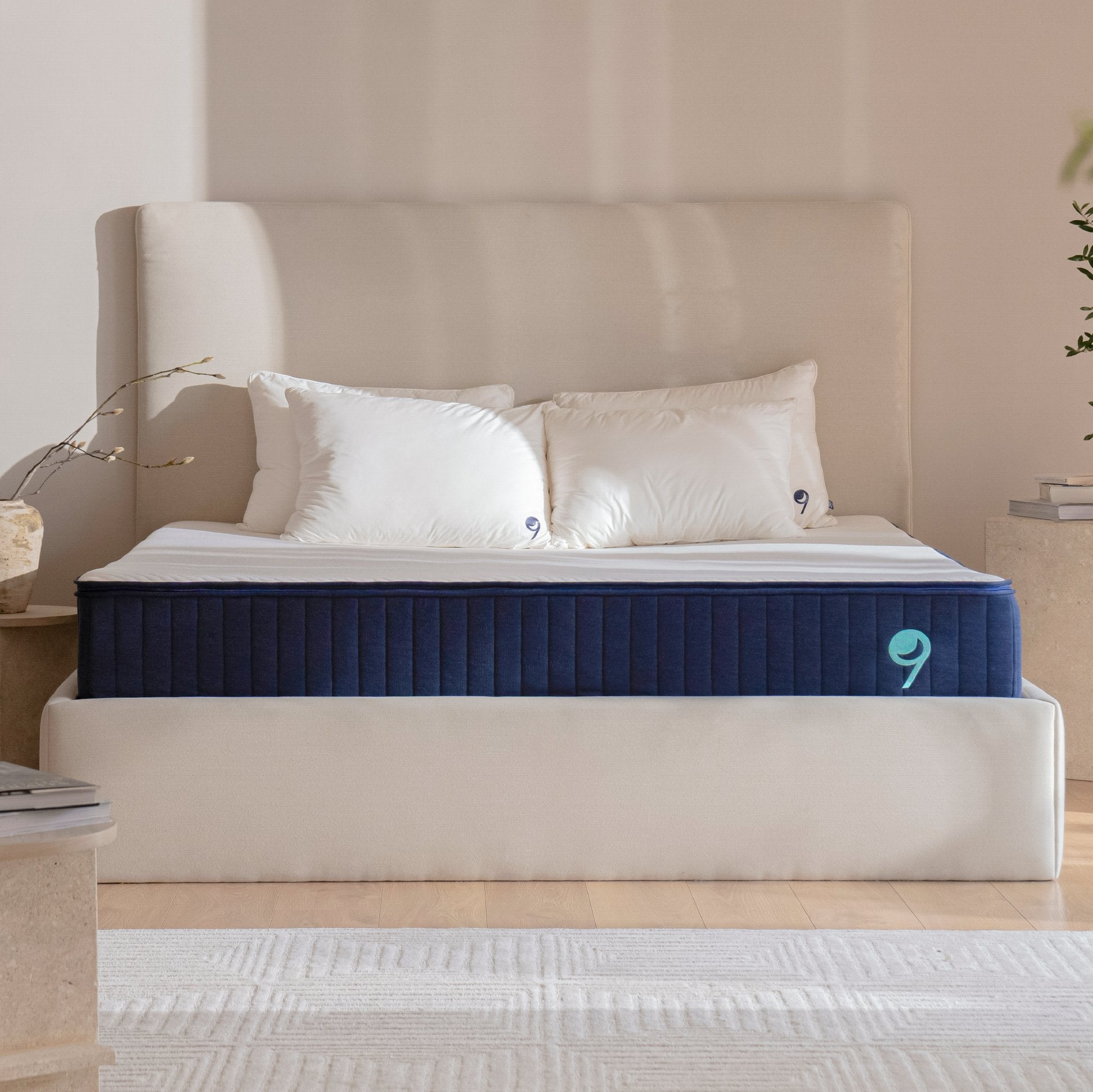
As a pioneering brand in applying high technology to production, Ru9 offers users the Original Ru9 mattress line with an international standard height of 25cm and a multi-layer design, good elasticity, providing customers with perfect experiences.
Ru9's mattress products are all CertiPUR-US® certified, ensuring health safety and environmental friendliness. In addition, the warranty policy of up to 10 years along with the 100-day trial program has attracted many customers who are interested and trust to choose.

Height above 30cm
Typically, this type of mattress is only suitable for certain individuals. Additionally, they are difficult to box, transport, and difficult to find suitable bed sheets for. At this height, you can only choose an air mattress or a spring mattress, or specially order a specific mattress line.
To choose a mattress with the right thickness, the best way is to visit official stores directly to get advice and experience and feel the products yourself.
In summary
In reality, the thickness of various mattress types is very diverse to largely meet user needs. This is because mattress thickness affects each person's health and sleep. Therefore, research information and directly experience to choose the product that you feel most comfortable with.


