







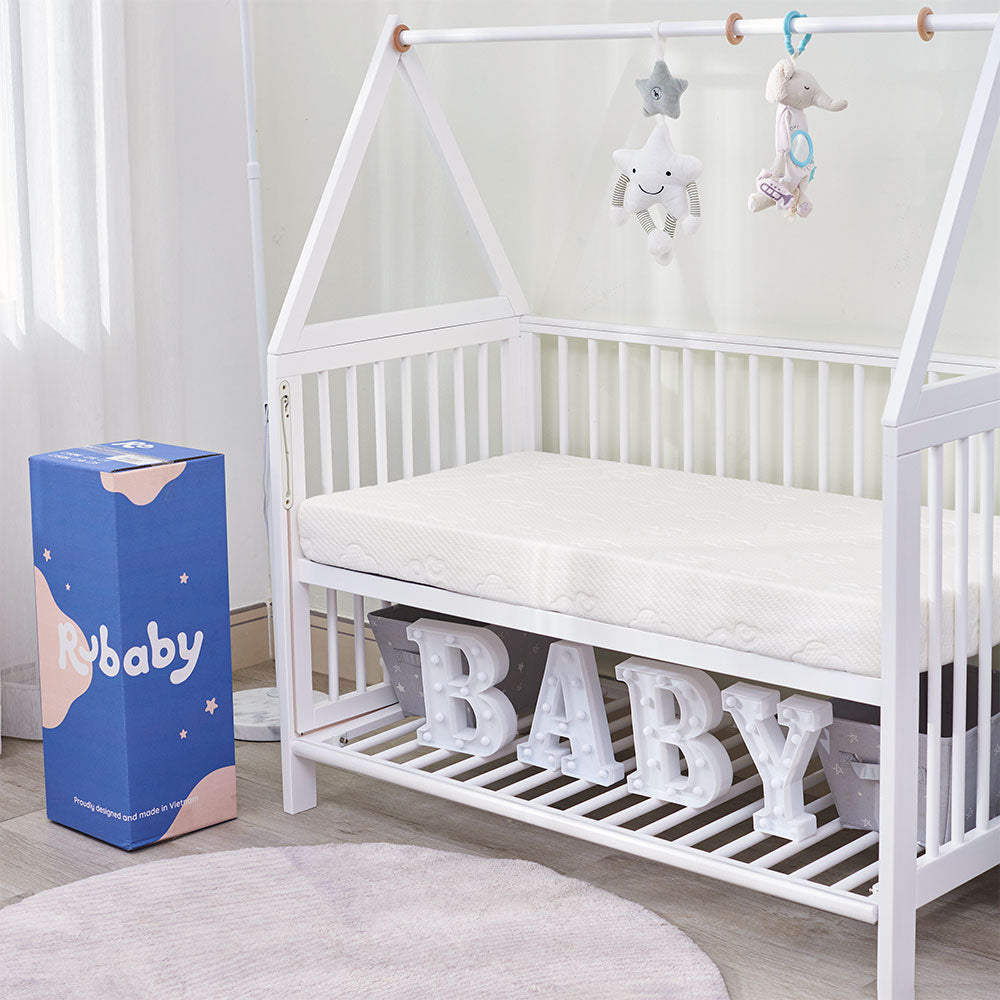


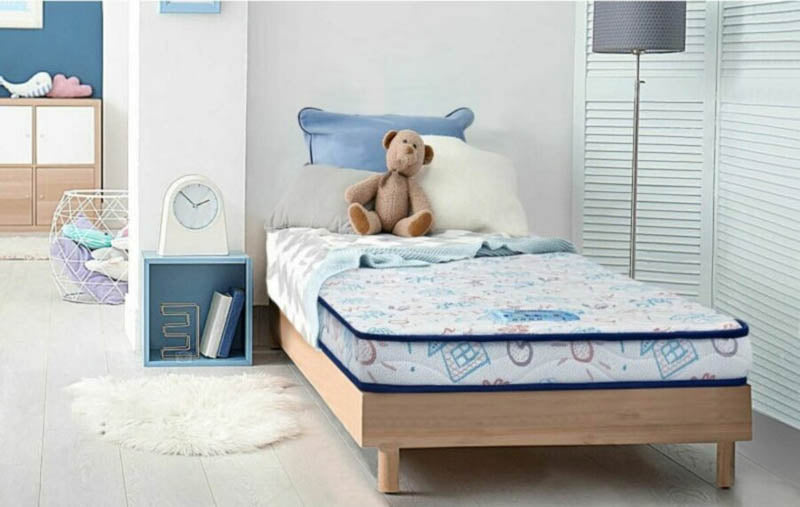
When caring for young children, parents always want to provide the best, from nutrition and living space to daily sleep. Among these, a foam mattress for the baby plays an important role in nurturing sleep and physical development. However, many parents are concerned when they notice the mattress gradually turning yellow after a period of use. Is this a sign of poor quality or does it affect the child's health? This article will help you better understand the causes, the natural nature of this discoloration, and how to handle it properly to ensure safety and durability for the product.

Foam mattresses turning yellow is a normal phenomenon
Why do foam mattresses turn yellow?
As parents, ensuring your child's safety and comfort is always a top priority. Therefore, it's understandable to feel concerned when the foam mattress in your baby's room starts to turn yellow. However, you can rest assured that this is a common and completely natural phenomenon. Let's explore the causes of this phenomenon and why you don't need to worry too much.

Foam mattresses turn yellow due to many factors
Properties of polyurethane foam
Foam mattresses for infants, toddlers, and children are made from high-quality polyurethane foam specially manufactured in Northern England. Polyurethane is an ideal material due to its flexibility, durability, and softness, providing babies with a comfortable sleep. However, one of the natural characteristics of this type of foam is that it tends to turn yellow over time.
Factors that cause foam mattresses to turn yellow
There are several reasons for the yellowing of polyurethane foam mattresses:
UV rays from sunlight
One of the main reasons mattresses change color is exposure to ultraviolet (UV) rays from sunlight. When the mattress is exposed to light, even indirectly, UV rays can break down the chemical structure of polyurethane, leading to yellowing.

UV rays, temperature, and humidity cause mattresses to yellow
Temperature
High temperatures can accelerate the discoloration process. If the child's room is too warm, the heat can promote chemical reactions within the foam, causing the mattress to yellow more quickly.
Humidity
Moisture in the air and humid environments also contribute to mattress discoloration. High humidity can interact with chemical components in the foam, creating a reaction that causes the foam to turn yellow. This is a natural reaction and does not affect the safety or softness of the mattress.
Yellowing foam mattresses are a natural and harmless phenomenon
It's important to remember that the yellowing of foam mattresses is natural and completely harmless. This color change does not mean the mattress is dirty, degraded, or no longer safe for the baby. The mattress retains its original support, comfort, and quality; only the color changes over time with use.

Foam mattresses are safe for children
Solutions to help limit mattress yellowing
Although it cannot be completely prevented, you can still apply some methods to slow down the mattress's discoloration process:
-
Use quality sheets or mattress protectors: These help minimize direct light exposure, thereby limiting the yellowing process.
-
Maintain a cool, well-ventilated room for the child: Avoid placing the mattress in direct sunlight or in areas that are too hot and humid.
-
Rotate the mattress regularly: This helps distribute the effects of environmental factors evenly, thereby slowing down the mattress's discoloration.

Careful storage is needed to prevent mattress discoloration
Conclusion
If the foam mattress in your child's room is yellowing, you absolutely don't need to worry. This is a normal characteristic of polyurethane material and does not affect the safety, durability, or comfort of the mattress. Understanding the cause and applying some simple measures will help you maintain the quality of your baby's mattress for many years. Rest assured that this phenomenon is just a natural part of the mattress material's "life cycle" and is completely harmless to your beloved baby.


